The saga of the headset that actually survives
So, you are looking for a new headset. You have probably scrolled through endless lists of plastic junk that snaps if you look at it the wrong way. Enter the
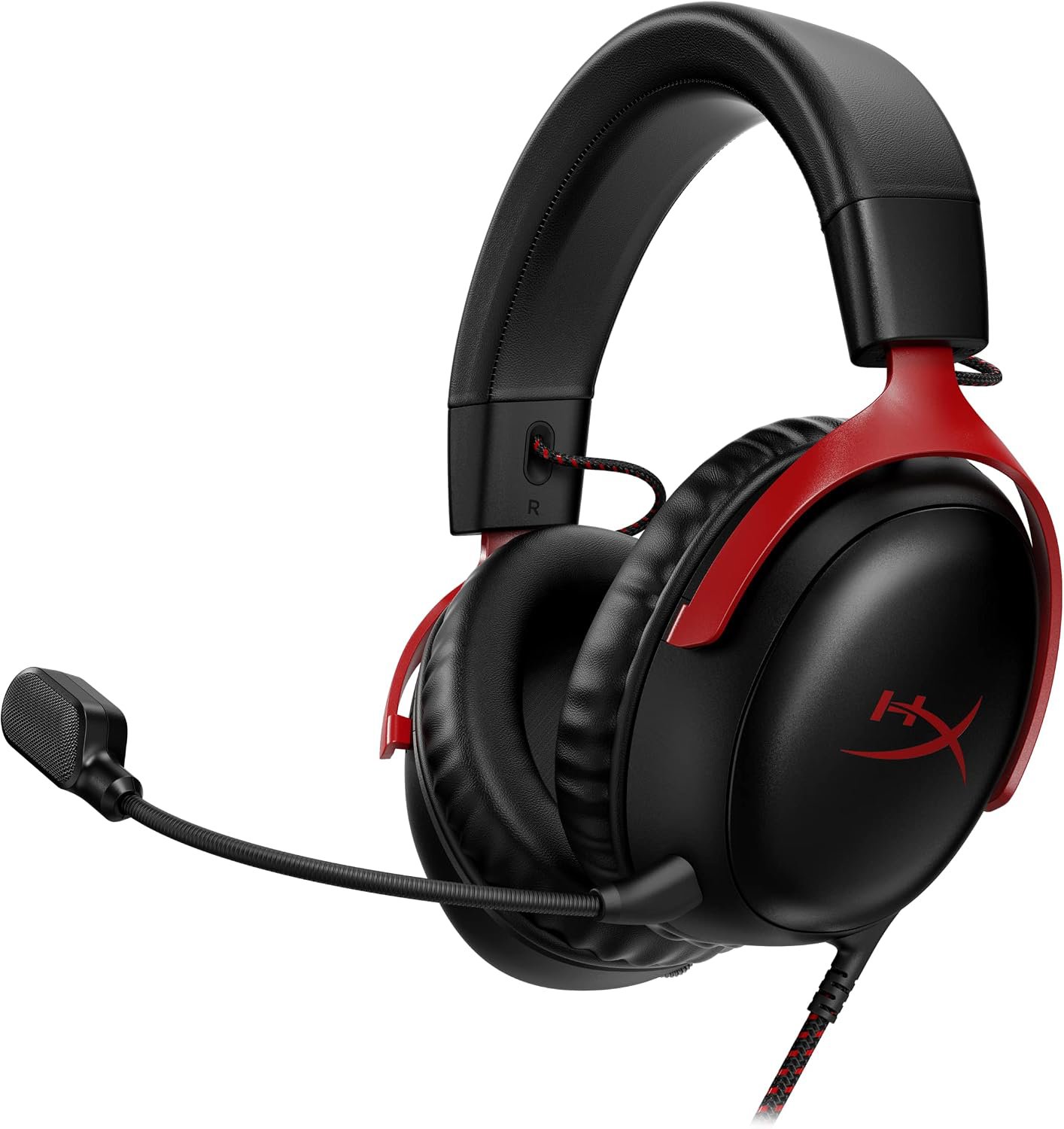
HyperX Cloud III. The tech world is full of companies promising the moon and delivering a paperweight, but HyperX has a bit of a reputation for building things that don't immediately disintegrate.
Let us talk about the design. It is built with a full metal frame. It feels sturdy, which is a welcome change in an era of cheap, creaky plastics. You could probably drop this thing, trip over the wire, and it would still be ready to help you hunt down Sentinel in the next Elder Scrolls game. It is not going to win any beauty pageants for avant-garde design, but it does the job without looking like a spaceship crashed onto your ears.
Now, onto the comfort factor. If you wear glasses, you know the pain of most headsets. They act like a vice, clamping your spectacles into your skull until you have a headache that would make a dragon weep. The memory foam here is the real deal. It is plush, soft, and actually stays comfortable for those marathon sessions when you lose track of time and the sun starts coming up.
The spec sheet claims these have angled 53mm drivers. In reality, they sound pretty good out of the box, even if they aren't going to replace a pair of audiophile cans. They handle gaming audio with enough clarity that you can hear footsteps behind you, which is really all we care about, right? If you find the sound a bit flat, there is always the software to tweak things, provided you have the patience to fight with the app.
I have seen some buyers complaining about the cable situation. It is true, the way you connect these, 3.5mm into a dongle into a USB, is a bit of a spaghetti nightmare. It is not the most elegant solution in the world, but it works. Sometimes, I think engineers just like making things complicated to see if we will notice. Well, we noticed.
Features that matter and some that dont
The microphone is the standout feature here. It is a 10mm unit, and it is genuinely clear. If you are tired of your teammates telling you that you sound like you are broadcasting from the bottom of a deep-sea trench, this is an upgrade. It has a built-in mesh filter and a little LED indicator, so you can tell at a glance if you are muted. Honestly, the mute button is the most important piece of hardware on any headset, because nobody wants to hear you munching on crisps mid-raid.
Then there is the DTS Spatial Audio. It is included, it is virtual, and it adds that extra layer of immersion. Does it make you a better player? Probably not, but it makes the world feel a bit more alive. It is a nice addition that justifies the price point slightly more than just shipping a box of plastic and hope.
The software, however, is a different story. It is the NGENUITY app, and to be blunt, it is not the most intuitive piece of software I have ever used. It gives you control over the equalizer and the spatial audio settings, which is great, but it is not exactly a smooth ride. You will likely spend an hour or two tweaking it to get the sound just how you like it, and then you will never open the app again. Such is the life of a modern PC gamer.
The final verdict: Buy it or bypass it?
If you are the kind of gamer who wants a reliable, comfortable headset that won't fall apart after six months of use, buy the
HyperX Cloud III. It is a workhorse, not a show horse. However, if you are an audio purist expecting studio-grade sound without any software tweaking, or if you get easily annoyed by complex cabling, you might want to look elsewhere. For the rest of us, it is a solid, sensible choice that keeps things simple.