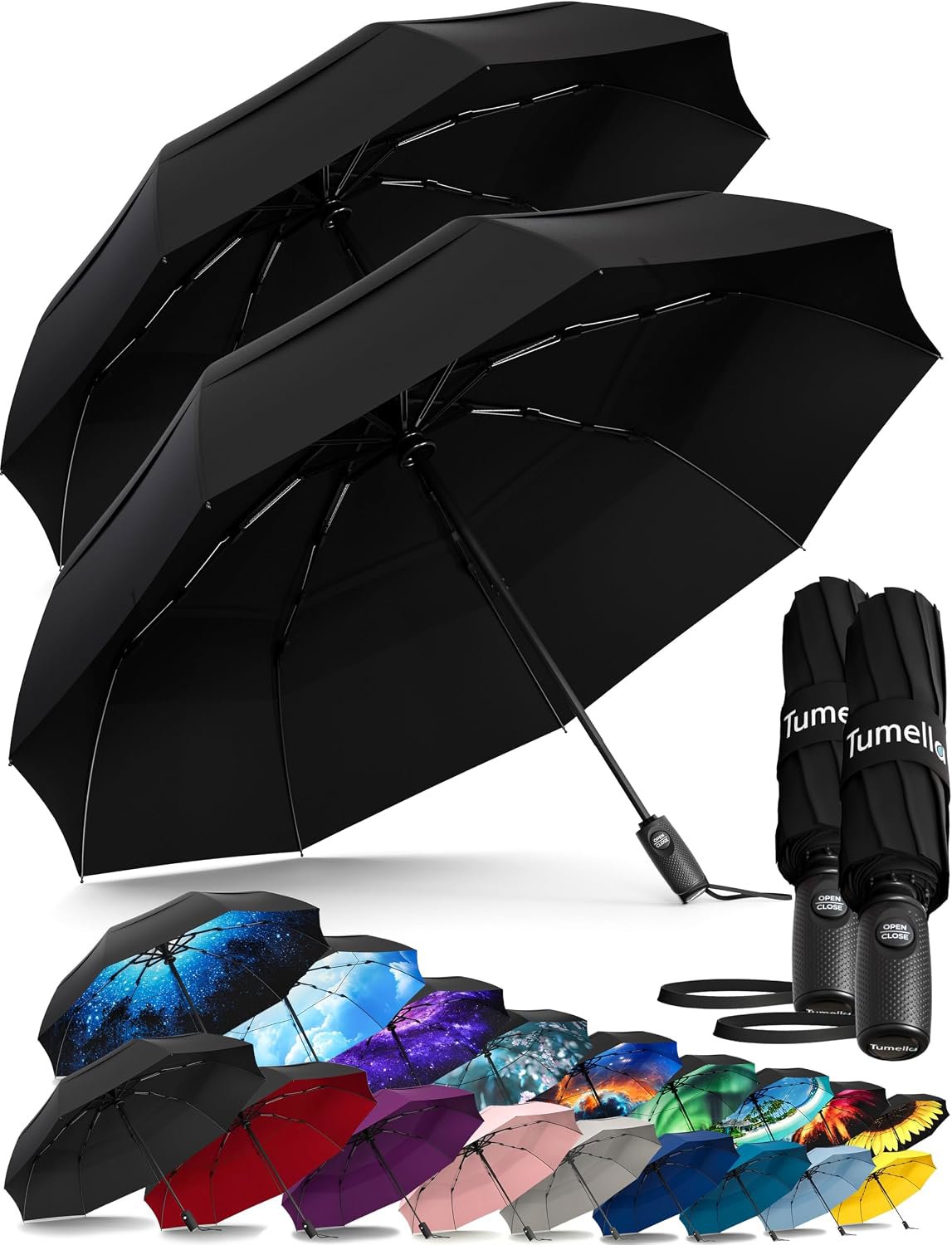
Taming the British Weather One Gust at a Time
If you have ever spent a Tuesday morning shivering under a mangled, inside-out umbrella while the wind tries to relocate you to the next county, you know the struggle. Living in the UK, a reliable umbrella is not just an accessory, it is an essential piece of survival gear. I have seen enough broken brollies in station bins to last a lifetime, so when I get my hands on something like the
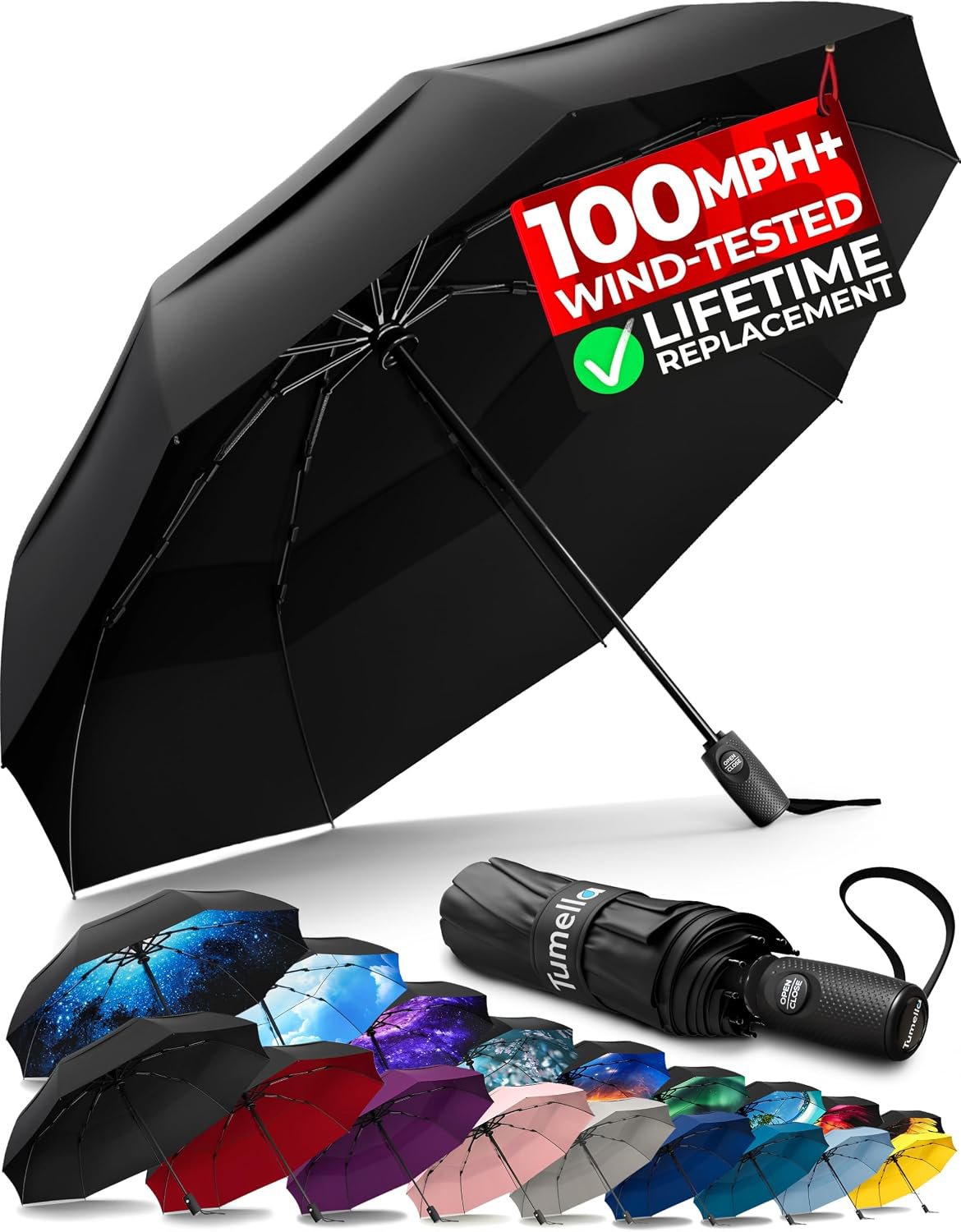
Tumella, I pay attention. This thing is marketed as wind-tested for extreme conditions, and while I treat marketing claims with a healthy dose of outdoor cynicism, the build quality here is genuinely impressive.
The secret to its survival isn't just luck, it is the nine-rib fiberglass frame. Unlike the cheap, metal-spined nightmares that fold at the slightest breeze, these ribs are designed to flex. In the world of high-altitude gear, flex is your best friend. A rigid pole snaps, but a flexible one survives to fight another day. When you are caught in the middle of a storm, this umbrella acts more like a shock absorber than a static shield. Users consistently report that even when the wind manages to flip it inside out, the frame holds its structural integrity, meaning you can just flip it back and keep moving without needing a trip to the bin.
Portability is where this little beast earns its keep in my pack. It folds down to roughly 11 inches, making it a dream for shoving into the side pocket of a backpack or a car door cubby. It is not the lightest featherweight you will ever carry, as the extra durability adds a bit of heft, but honestly, I would rather carry an extra hundred grams of metal and fiberglass than arrive at a meeting looking like a drowned rat. It feels substantial in the hand, and that is a trade-off I am more than happy to make.
There is something satisfying about the one-handed operation, too. Whether you are holding a lead for your dog, carrying a coffee, or juggling a pile of groceries, that button is a lifesaver. You press it, and the canopy expands with a purposeful snap. Just a warning to my fellow adventurers: do not open this in a crowded corridor unless you want to startle your colleagues. It deploys with real enthusiasm. Closing it is the only time you really feel the tension of that heavy-duty spring, but it is a small price to pay for a canopy that stays put when the heavens open.
Finally, we have to talk about the customer service. We have all dealt with gear that fails just outside of the warranty period, but the
Tumella team seems to actually stand behind their product. I have read numerous reports from people who had an issue with the mechanism and found the company quick to send a replacement under their lifetime policy. In an era of disposable fashion, that kind of commitment to longevity makes this a standout piece of kit for anyone who actually uses their gear outdoors.
Under the Hood of a Storm-Ready Companion
Let us look at the specs that keep you dry when the sky turns dark. The 42-inch canopy is the sweet spot for a travel umbrella. It is large enough to keep your shoulders dry during a heavy downpour, but compact enough that you are not accidentally poking strangers in the eye as you navigate a busy street. The polyester canopy fabric is water-repellent, meaning you can give it a sharp shake before hopping on the train to avoid drenching the floor or your fellow passengers.
The handle is worth a mention for its ergonomics. It is designed with a comfortable, non-slip grip that gives you real confidence when you are trying to fight a headwind. Some users have mentioned wanting it to be a bit longer, but for most, it provides enough leverage to keep the umbrella pointing into the wind where it belongs. The combination of that solid handle and the fiberglass ribbing creates a stable platform that does not dance around in your grip, even when the gusts start getting aggressive.
The automatic mechanism is clearly the star feature here. It uses a high-tension spring system that feels robust. Because it is an auto-open and auto-close system, you do have to be mindful of the technique. You press the button to open, and press it again to retract the canopy, then manually push the shaft back into the handle to reset the spring. It is a simple rhythm to learn, and once you get it, it becomes second nature. It is this mechanical simplicity that makes it so reliable in the field, far outperforming the cheap alternatives that usually jam the first time they get a little wet.