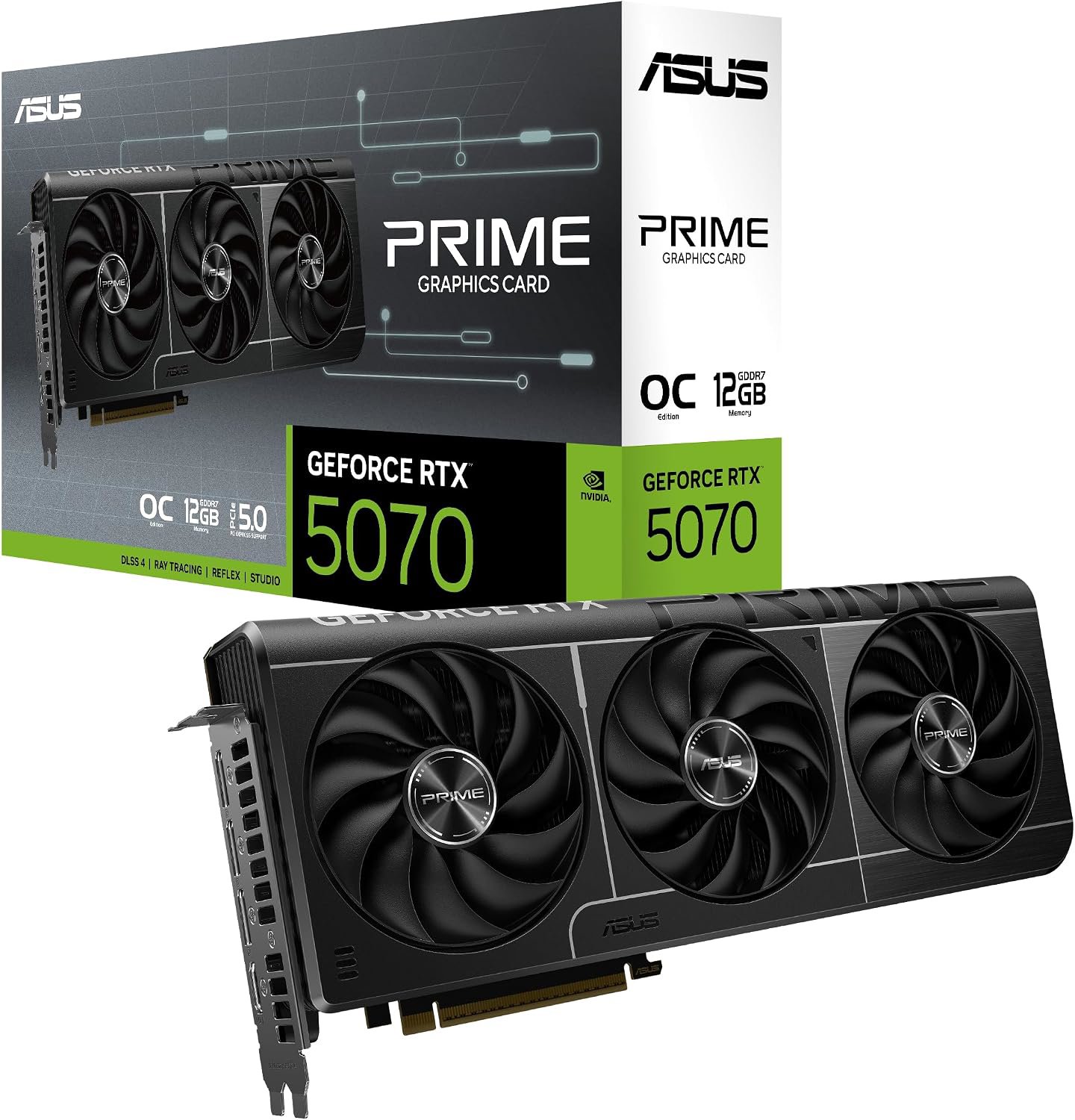
Let us talk about that glorious spec-sheet creep
Welcome to the inevitable march of progress. Just when you convinced yourself that your aging graphics card was doing fine, here comes the
ASUS Prime RTX 5070 to remind you that your frame rates are actually kind of embarrassing. I have spent years looking at cooling solutions that sound like jet engines and plastic shrouds that feel like they were molded from recycled lunch trays. This card, however, is trying a bit harder to look like a serious piece of hardware.
Under the hood, we are dealing with the shiny new NVIDIA Blackwell architecture. The marketing machine loves to scream about AI TOPS and
GDDR7 memory, and while most of that is just jargon to make you feel like you are buying a rocket ship, the memory bandwidth bump here is actually noticeable in real-world scenarios. It is not just faster, it is efficient. If you are still running a card from the 20-series, making the jump to this is going to feel like switching from a tricycle to a sports bike.
The
ASUS Prime aesthetic is functional, which is my favorite kind of design. No unnecessary neon vomit, just a 2.5-slot cooler that actually does what it is supposed to: keep the silicon from throttling itself into oblivion. The phase-change thermal pad is a nice touch. It is the kind of engineering detail that shows ASUS realized their target audience is tired of swapping out thermal paste every six months like it is some kind of hobby.
Buyers keep mentioning how this thing handles everything from creative work to max-settings gaming, and it is hard to argue with that when looking at the clock speeds. Pushing 2587 MHz in OC mode is respectable for a card that doesn't require a dedicated nuclear power plant to run. It feels like a balanced entry into the new generation, even if your wallet might disagree with the price tag.
Of course, the reality is that no matter how good the card is, it won't fix your questionable internet connection or your questionable life choices. But for the actual task of pushing pixels at high refresh rates, it is undeniably solid. It is a calculated, well-engineered piece of gear that respects the fact that you want to play games, not constantly troubleshoot your system settings.
Cooling, size, and the geometry of heartbreak
Let's talk about the physical reality of the
ASUS Prime RTX 5070. It is twelve inches long and five inches wide. That is not just a graphics card, that is a structural beam for your motherboard. If you are one of those people who still thinks a mid-tower case from 2018 is a good home for modern tech, you are in for a world of pain. Measure twice, cut once, or in this case, measure twice and realize you need to order a new case with better airflow.
The Axial-tech fans are the heroes of this story. By shrinking the fan hub,
ASUS has managed to lengthen the blades, which actually helps with airflow. It is a simple trick, but it is effective. The triple-fan array means that even under heavy load, the card doesn't sound like a vacuum cleaner having a panic attack. The dual BIOS switch is a thoughtful addition for the tinkerer who wants to prioritize silence over raw performance, or vice versa.
Then there is the connectivity. HDMI and DisplayPort 2.1 support ensures that you won't be upgrading your monitor anytime soon just to keep up with the outputs. It is a future-proof setup, which is exactly what you want when you are shelling out this kind of cash. It is refreshing to see a manufacturer lean into the SFF-Ready compatibility, acknowledging that some of us want power without needing a case the size of a small refrigerator.
The build quality feels dense. It does not flex in the slot, it does not rattle, and it seems designed to survive being moved around occasionally. The included adapter cable is a nice touch, though honestly, at this level, we should all be using native power connectors by now. Still, it works, and in the world of PC building, if it works without blue-screening, that is a win.