Into the void: My take on the Celticbird 80/600
Listen, I have spent more nights than I can count huddled in a sleeping bag, waiting for the clouds to break so I can catch a glimpse of something other than my own shivering reflection. Most beginner telescopes are built with plastic lenses that turn the rings of Saturn into a blurry smudge of sadness. When I saw the
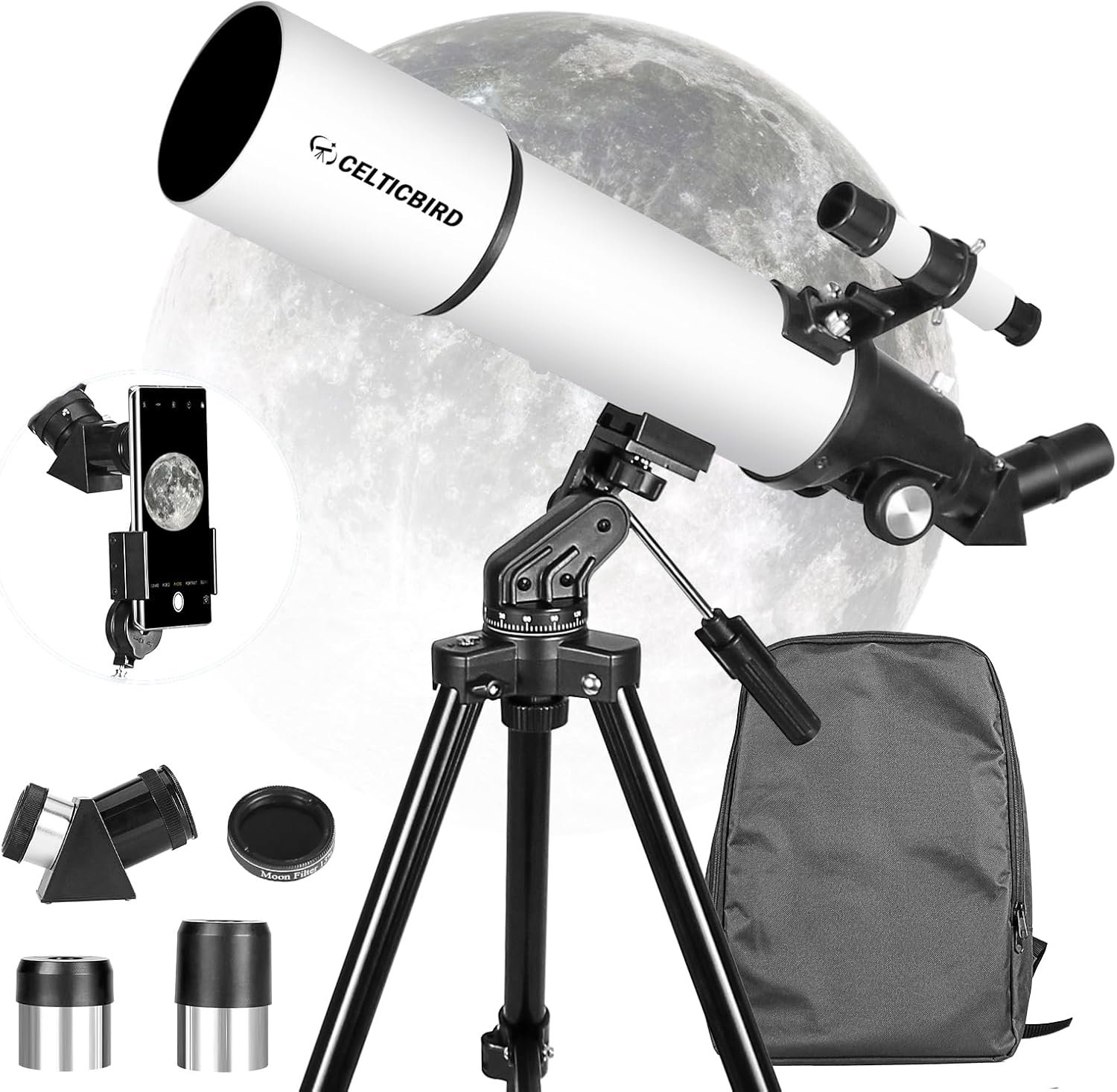
CELTICBIRD 80/600, I was braced for the usual disappointment. But, surprise, it is actually made of real glass, and the multi-coated optics actually do what they are supposed to do: gather light and show you the night sky, not just a distorted ghost of it.
Weight and packability are the bread and butter of any expedition. You do not want to be lugging a tank up a mountain trail, and thankfully, this setup is surprisingly light. It comes with its own bag, which is a massive win for those of us who prefer to hike to our viewing spots rather than setting up on a suburban driveway. Sure, the bag is not exactly built for a week-long trek through the Pyrenees, but for throwing into the trunk of the car for a weekend away from city light pollution, it is more than adequate.
The setup process is a breeze. If you can manage to build a simple tent in the dark while it is raining, you can put this together in under five minutes. No tools, no complex diagrams that look like ancient hieroglyphics, just a straightforward assembly that gets you looking at the moon while the coffee is still brewing. It is refreshing to see a manufacturer realize that we want to be looking at the sky, not spending two hours wrestling with a set of allen keys.
Now, let us talk about that stability. The tripod is decent, but let us be real: it is not a heavy-duty expedition mount. If you are standing on a ridge with the wind whipping around you, you are going to see some image jitter. My advice? Find a sheltered spot or keep your tripod legs retracted if the gusts pick up. It is a classic trade-off between weight and rock-solid performance, but for the price point, it is perfectly respectable for a beginner looking to get their feet wet in the hobby.
Overall, the experience is surprisingly crisp. Users frequently mention that seeing the craters of the moon for the first time is a jaw-dropping moment, and I have to agree. There is something primal about staring back at a celestial body that has been watching us for eons. While it might not be the piece of kit you use to discover a new nebula, it is more than capable of providing hours of entertainment, sparking an interest in science, or just giving you an excuse to stay up late under the stars.
What is in the box and does it actually work
The spec sheet claims an 80mm aperture and a 600mm focal length, which is a sweet spot for a versatile refractor. The fully coated lenses really do make a difference in clarity. By reducing reflections and boosting transmission, you get a view that is sharp enough to identify features on the lunar surface rather than just seeing a bright white circle. You get two eyepieces, 20mm and 9mm, giving you a bit of range to play with the magnification until you find that perfect balance of zoom and brightness.
The inclusion of a smartphone adapter is a nice touch for the social media generation or those who want to prove to their friends that they actually saw Saturn. Just a heads up: mounting your phone can be a bit fiddly the first few times. Do not get frustrated if you spend ten minutes trying to align the camera lens with the eyepiece. Take a breath, secure it, and once you get that shot of the moon, you will realize it was worth the effort.
The alt-azimuth mount is the standard for beginners for a good reason: it is intuitive. You move it up, down, left, and right. No need to worry about polar alignment or the rotation of the Earth when you are just starting out. It is simple, effective, and lets you follow the movement of the moon across the sky with relative ease. It is the kind of gear that encourages you to keep using it because it does not act as a barrier to the fun.
The final verdict: who gets the ticket to the stars
If you are a parent looking to inspire a future astronaut, or a weekend adventurer who wants to add a bit of celestial magic to your camping trips, the
CELTICBIRD 80/600 is a fantastic investment. It trades unnecessary complexity for solid, functional glass that hits the right notes for beginners. However, if you are looking for professional-grade deep-space astrophotography or a rig that can withstand gale-force winds on a mountain peak, you should keep looking and prepare to spend significantly more. For everyone else, this is your ticket to a much better view of our nearest neighbors in space.