Let's Talk About That 'QLED' Label
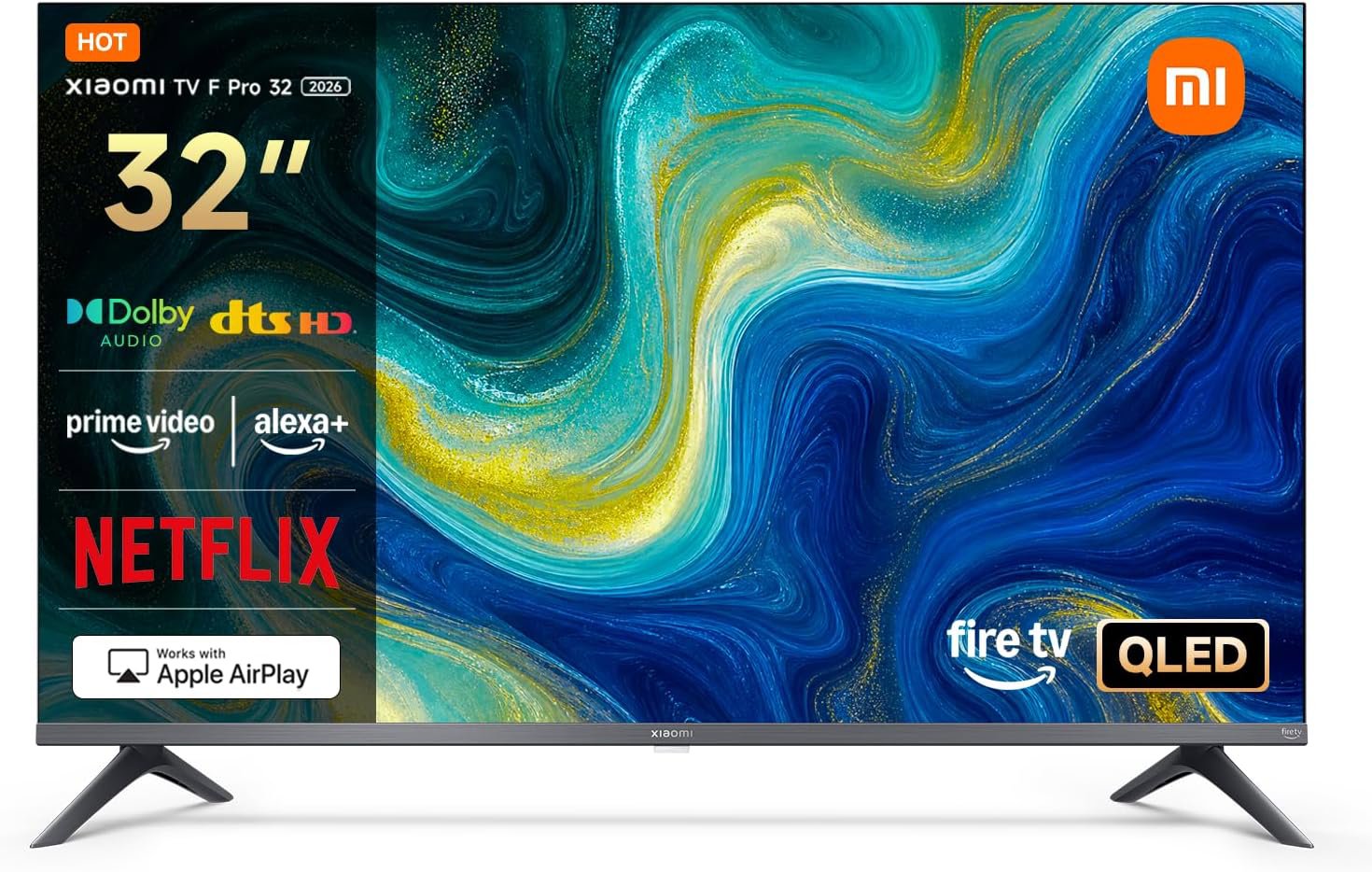
So, we have a 32-inch television claiming the
QLED badge. In the world of marketing, that is the equivalent of putting a spoiler on a base-model hatchback. It looks sporty, but are we actually racing? The spec sheet says one thing, reality says another, but in this specific instance, the Quantum Dot tech does actually add a bit of punch to the colors that you would not get on a standard cheap LED panel. It is vibrant, it is punchy, and for your morning news or background Netflix noise, it is perfectly serviceable.
However, do not let the bright lights blind you to the fact that this is a 720p display. Yes, in the year 2026, we are still rocking 720p on a 32-inch screen. If you are sitting on the couch three meters away, you will be fine. If you try to use this as a PC monitor or sit closer than a meter, you are going to see pixels the size of postage stamps. It is not designed to show you the pores on an actor's face, so manage your expectations accordingly.
The brightness maxes out at 270 nits. This is not going to set your retinas on fire, which is actually a blessing if you are using this in a dark dorm room at 2 AM. The contrast ratio of 1200:1 is honest, which is tech-speak for 'do not expect OLED-level blacks.' You get gray-ish darks, which is fine for the price point, but let’s not pretend it is a home cinema powerhouse.
I have seen some chatter from buyers about the Fire OS experience being a bit sluggish. When you cram a full-blown operating system onto hardware that is priced this aggressively, something has to give. Sometimes that is the fluidity of the menu animations. It is not unusable, but if you are coming from a high-end OLED, you will definitely notice the stutter when you are scrolling through your apps.
The design itself is slim and unassuming. It will fit into a bookshelf, a tight corner, or on a wall mount without demanding all the attention in the room. It is a utility player. It is the gadget equivalent of a reliable toaster that occasionally takes a second to pop the bread. It does the job, it looks decent doing it, and it does not pretend to be a Michelin-star kitchen appliance.
Fire TV and Other Shiny Objects
The integration of Fire OS is the real star of the show here. If you are already deep into the Amazon ecosystem, this is a plug-and-play situation. You get your Netflix, Disney Plus, and Prime Video apps right there. The Alexa voice control is surprisingly handy when you are too lazy to find the remote under a pile of laundry, which, let's be honest, is most of the time.
Then there is the Apple AirPlay support. For the college students or the minimalist crowd who just want to cast a quick video from their iPhone to the big screen, it actually works. It is the kind of feature that feels premium even when the hardware it is attached to is firmly budget-tier. It is a nice touch that makes the TV feel a lot more modern than its 720p panel suggests.
Connectivity is a mixed bag. You have your HDMI ports, an Ethernet port, and a USB slot, but just the one USB. If you are the type of user who wants to plug in a hard drive, a keyboard, and a fancy LED light strip, you are going to need a hub. And please, do not try to play 4K files from a hard drive on this thing. It is a 720p screen, and the processor is not trying to be a high-end media player. It wants to stream, and it wants to stay in its lane.
The Final Verdict
If you are setting up a dorm room, a home office, or a guest bedroom, this
Xiaomi TV is a fantastic deal at the current price point. You are getting a decent, brand-name QLED screen that handles streaming like a pro. However, if you are a pixel-peeper, a 4K gamer, or someone who gets annoyed by even the slightest lag in an operating system, you should look elsewhere and prepare to spend significantly more.