Into the great unknown, from your backyard
If you have ever spent a night huddled in a sleeping bag, listening to the crackle of a dying campfire while staring up at the vast, uncaring abyss of the cosmos, you know the feeling. You want to see more. You want to know what is happening up there on the lunar surface. Usually, this urge leads to buying expensive equipment that requires a PhD to align and a moving van to transport. That is where the
Apgoza Refractor Telescope tries to change the game, offering a compact, lightweight solution that you can actually toss in your pack for a weekend of adventure.
When I look at gear, I look for how much abuse it can take before it decides to retire early. Weighing in at only 1.8 kilograms, this unit is clearly built for the mobile explorer. It is not designed to be a permanent fixture in a high-tech observatory, but rather a travel companion for the amateur astronomer who wants to see the craters of the moon without lugging around a mountain of heavy metal. Buyers keep mentioning that the assembly is so intuitive that even kids can get it ready for action in minutes, which is a massive win when you are losing daylight.
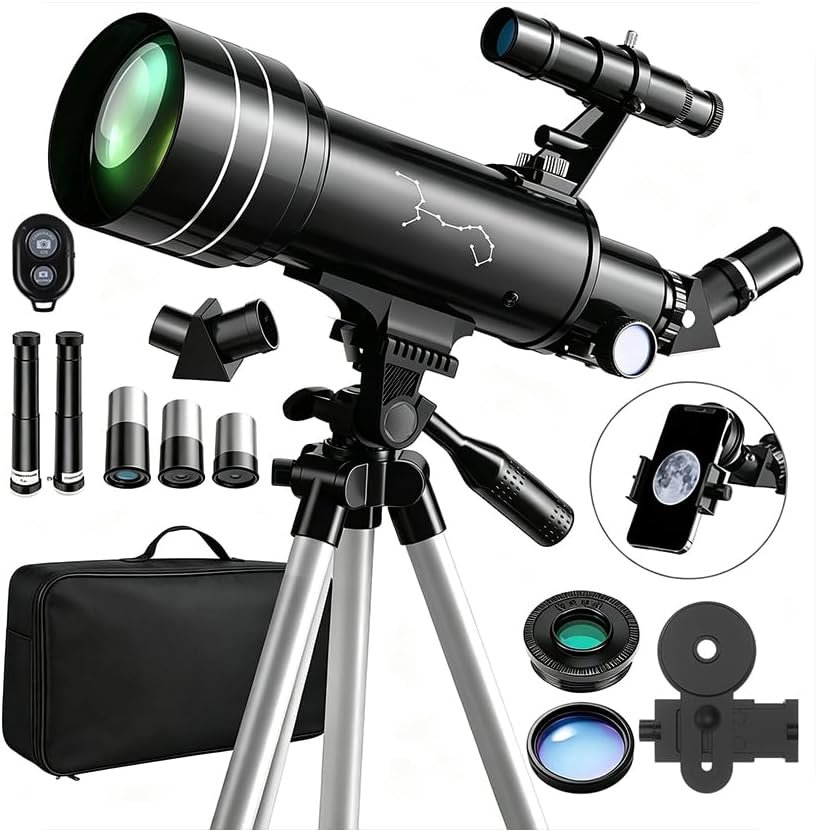
The kit comes with a trépied that adjusts up to 125 centimeters, meaning you can set it up on uneven forest floors or a flat balcony with relative ease. It is not bombproof in the sense that you could drop it off a cliff and expect it to work, but for a telescope at this price point, it offers decent stability. The azimuthal mount allows for smooth panning, which is exactly what you want when you are trying to track a moving object across the night sky or just spotting a distant hawk during the day.
One of the features that really caught my eye is the inclusion of a dedicated smartphone adapter. Let us be honest: if you do not post a photo of the lunar surface to show your friends you were actually out doing something cool, did you even go stargazing? Being able to snap those photos directly through the eyepiece is a fantastic addition for beginners who want to share their discoveries without needing to invest in a dedicated planetary camera. It makes the whole experience feel less like a dry science experiment and more like an interactive adventure.
Is it perfect? Well, let us be real. It is a entry-level refractor. You are not going to be discovering new galaxies or mapping the rings of Saturn with the clarity of the Hubble telescope. However, for those looking to spark an interest in astronomy in their children, or for adults who just want to spend their Friday nights looking at the sky instead of a screen, it hits the mark perfectly. It is about accessibility, portability, and making that first connection with the night sky as painless as possible.
Tools of the trade for the budding astronomer
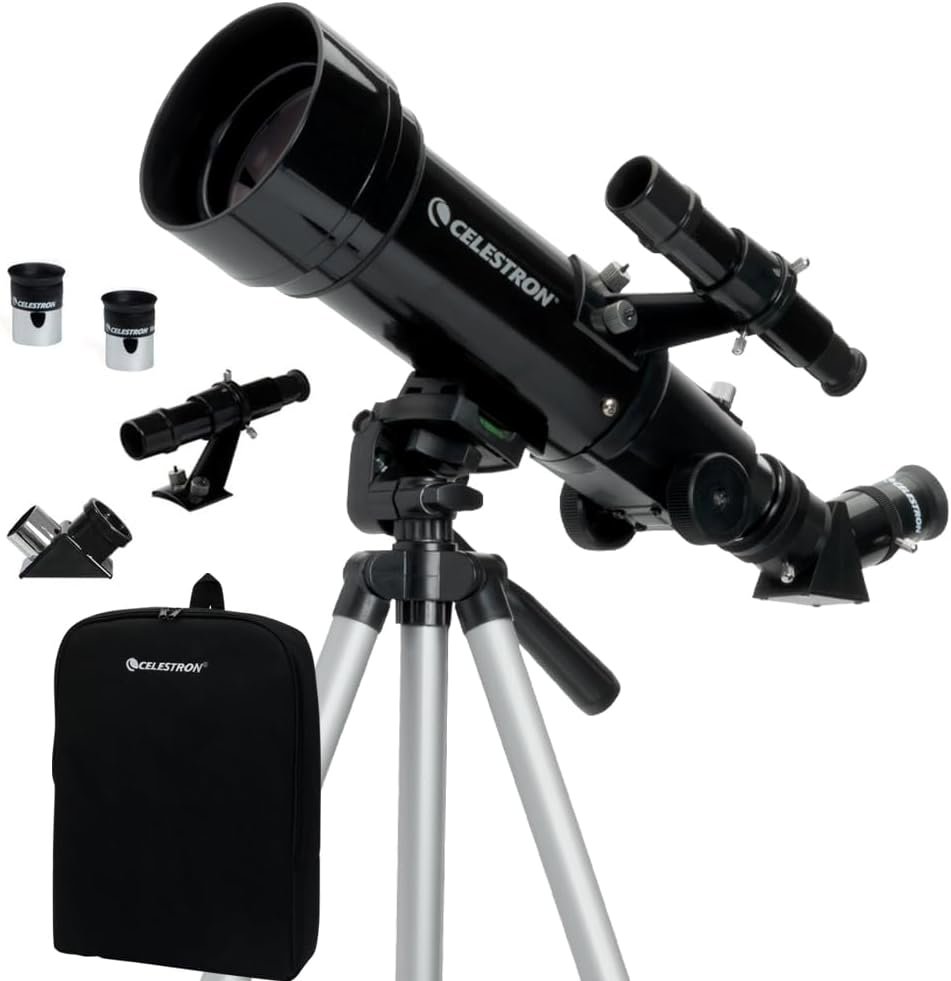
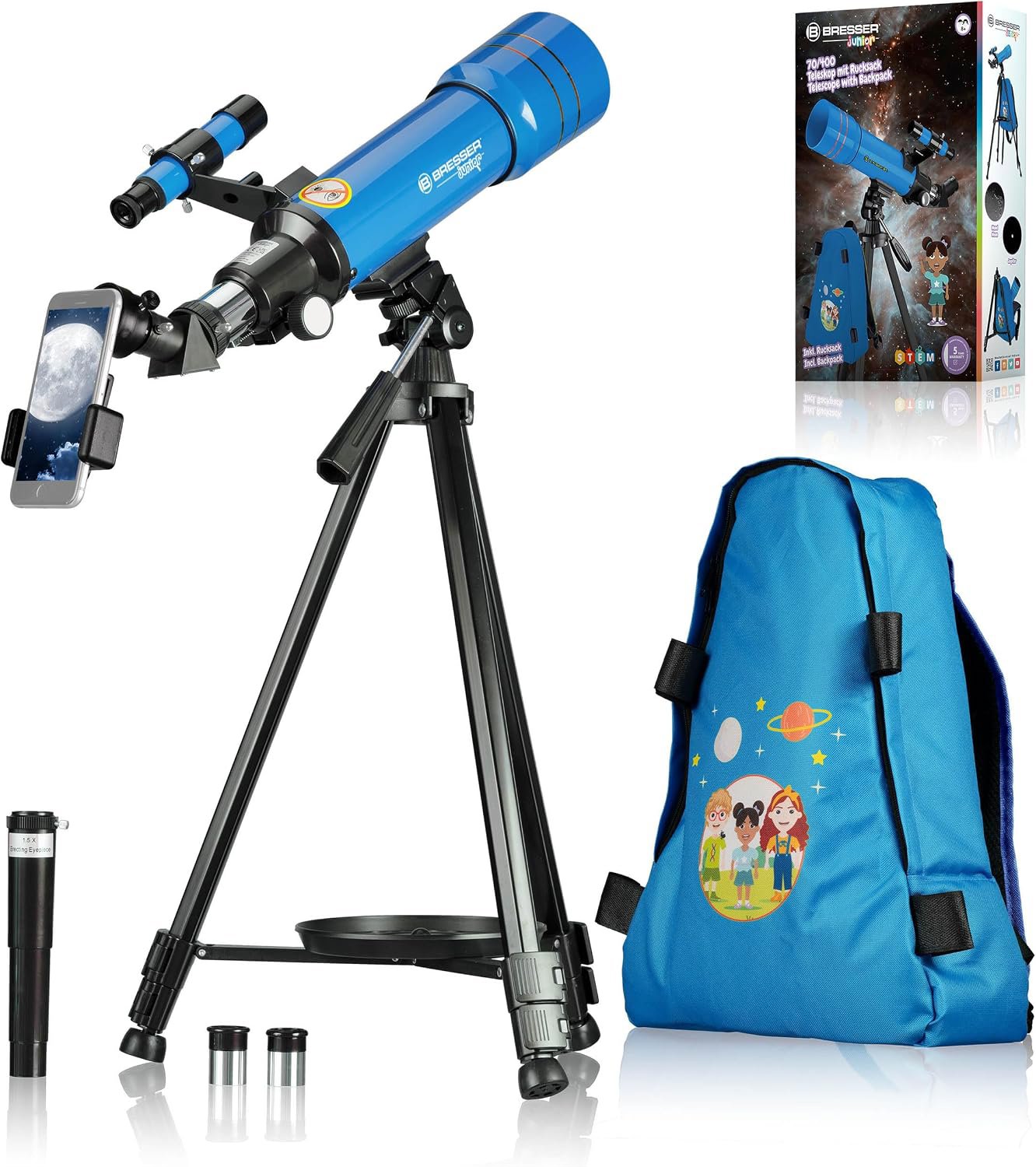
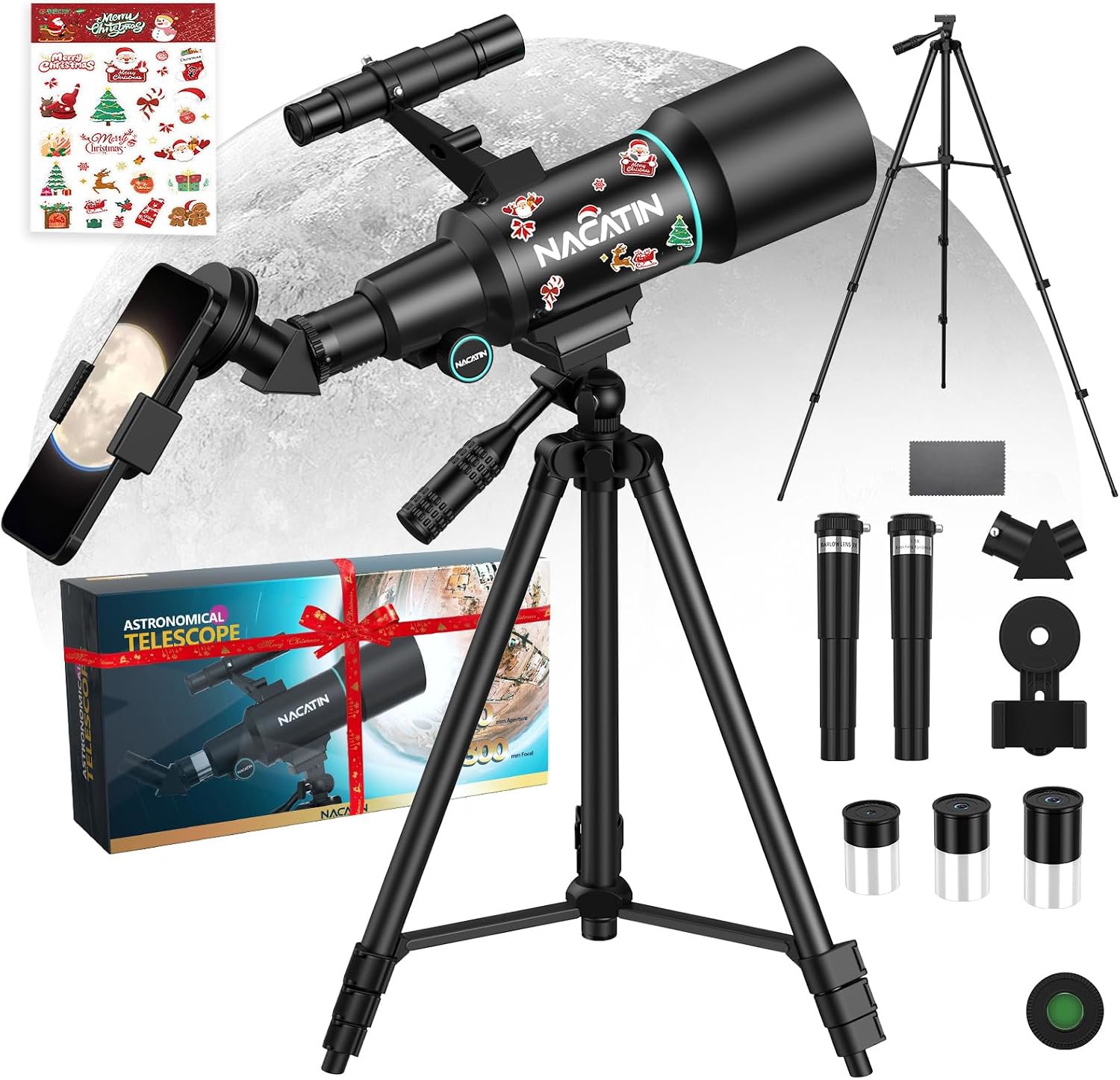
What you get in the box is actually quite comprehensive. You have your choice of 20mm, 12.5mm, and 6mm eyepieces, which provides a nice range of magnification options from 20x to 200x. When you pair these with the Barlow lenses, you start to see how you can customize your view. The 45-degree zenith mirror is a life-saver for your neck, as it allows you to look through the scope without having to perform a yoga pose that would leave you stuck in the dirt for the rest of the night.
The safety aspect is also addressed with the included Baader solar filter. I cannot stress this enough: never stare at the sun without the right protection unless you want to cook your retinas. Having this included shows that the manufacturer is thinking about the realities of amateur use, where people might get a bit too enthusiastic and point the scope at the sun during the day. The lunar filter is equally useful, as the moon can be surprisingly bright and wash out the details you are trying so hard to observe.
Finally, the portability factor cannot be overstated. Everything packs down into a bag that fits easily into a standard backpack. Whether you are trekking to a dark-sky site or just taking it to a music festival to see what the moon looks like after a few hours of live music, the footprint is small enough that you will not regret bringing it along. It turns the telescope into a piece of gear that you actually use, rather than a piece of gear that gathers dust in the back of your closet because it is too much of a hassle to set up.
The final frontier verdict
If you are a beginner, a parent looking to get your kids off their tablets, or someone who wants a portable setup for quick stargazing sessions during camping trips, the
Apgoza Refractor Telescope is a fantastic, budget-friendly entry point that gets the job done without any fuss. However, if you are looking for professional-grade optics or a telescope to capture long-exposure shots of deep space nebulas, you should skip this and look at high-end, dedicated astrophotography equipment.