Putting the grease aside for a digital upgrade
Listen, I spend most of my life elbow-deep in engine blocks and rusted bolts, where things either work because they are built right or they do not work because they are junk. When it comes to smart home tech, I usually approach it with the same level of suspicion I reserve for a torque wrench from a bin at the gas station. Most of these smart plugs are just flimsy plastic shells packed with proprietary software that turns into a paperweight the moment the manufacturer decides to shut down their cloud servers. But the
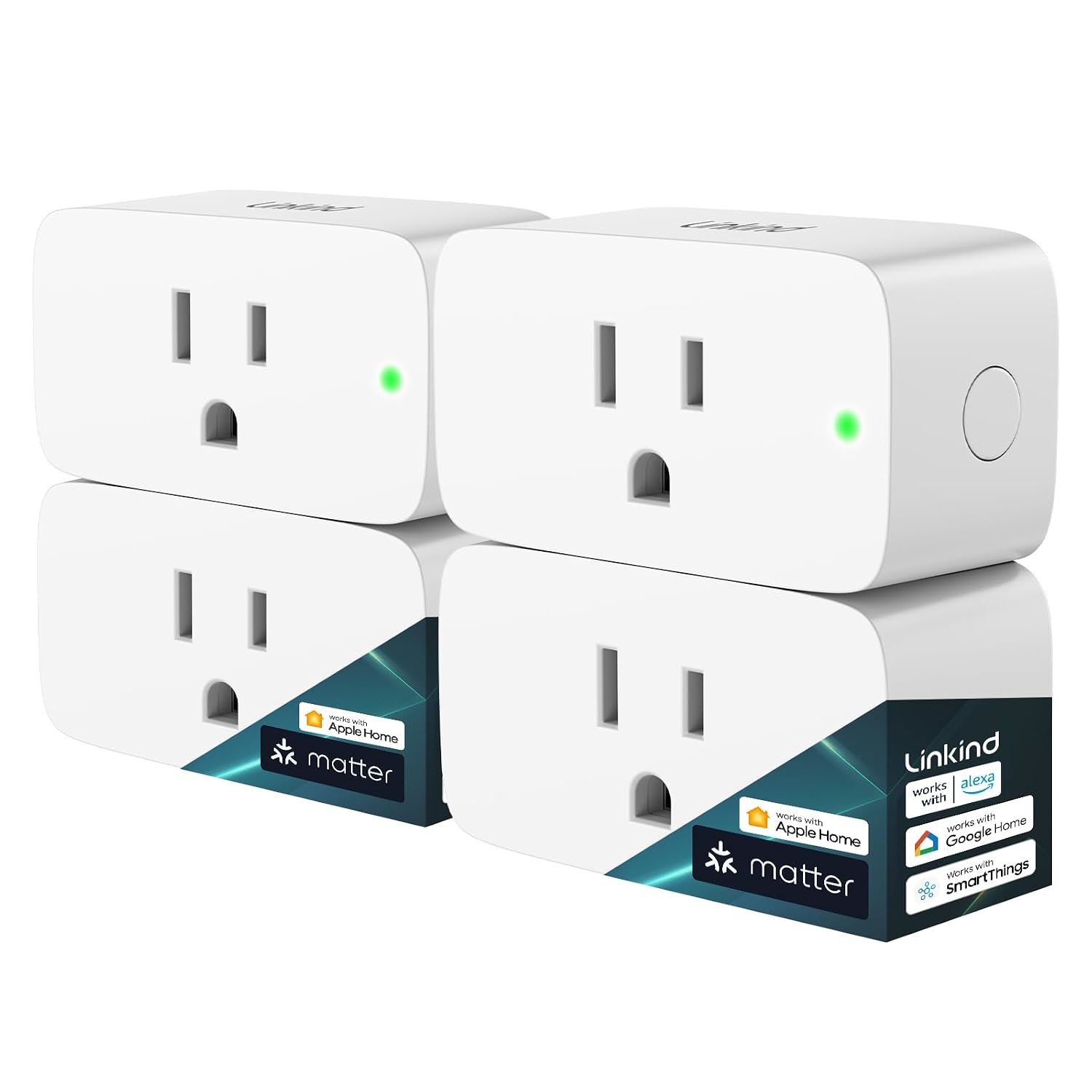
Linkind Matter Smart Plug actually caught my attention because it is built on the Matter standard, which is about as close to an industry-wide 'universal joint' as we are going to get in the smart home world.
The build quality on these is decent for what they are. They are made of fire-resistant materials and feel solid enough for a household outlet. You are not going to be using these to run a high-draw table saw or an industrial compressor, but they are rated for 15A and 1800W, which is plenty of headroom for your lamps, fans, or that Christmas tree light setup you have been meaning to automate. They are compact, which I appreciate, because there is nothing more annoying than a smart plug that hogs the entire wall plate and leaves your second outlet useless.
Installation is where these things usually make me want to throw my tools across the shop, but the Matter protocol actually does what it claims. You do not need to download a dozen different apps just to turn a light on. You scan the code, your phone talks to your hub, and you are up and running. It is clean, it is straightforward, and it does not require you to hand over your life story to some random server in the cloud just to dim a lamp in the living room.
That said, do not go thinking this is a 'buy it for life' piece of hardware. It is still an electronic device with a Wi-Fi chip inside, and my experience with these kinds of gadgets is that they have a lifespan. I have seen reports that after a year or so, some of these units might start dropping their connection. It is not exactly the same as a cast-iron engine block that will outlive me, but for the current price, you are getting a decent utility for the money. Just keep your expectations in check; it is a tool, not an heirloom.
The real kicker for me is the local control. Because these use the Matter protocol, they can talk to each other on your local network without needing to ping the internet every time you flip a switch. That means if your internet goes down, or if the manufacturer decides to pull the plug on their app services, your house does not stop working. That is the kind of reliability I can respect, even in the digital world. It is not perfect, but it is a hell of a lot better than the proprietary garbage that has been cluttering up the market for the last decade.
What is under the hood of these little outlets
When we look at the specs, you are getting a standard Type A plug configuration that is designed to handle 15 amps of current. The internal components are copper, which is what you want to see for decent conductivity. It is FCC certified, which gives me a bit of peace of mind that it is not going to turn into a fire hazard the first time you plug it in. The small form factor is a big win, as it does not interfere with adjacent plugs, which is a common design flaw I see in cheaper hardware.
The smart features are really all about the Matter compatibility. By supporting the Matter protocol,
Linkind has ensured these plugs play nice with Apple Home, Alexa, Google Home, and SmartThings. If you are tired of juggling apps just to manage your home office setup, this is a massive step forward. You get scheduling, timers, and remote control capabilities that are actually responsive. I appreciate that they offer the AiDot app as a standalone option if you do not have a hub, though the real magic happens when you tie it into your main home automation system.
However, there is a catch that you need to be aware of if you are planning to use these for anything critical. They are hard-coded to default to the 'off' position after a power outage. If you are thinking of using this for a freezer, a furnace, or anything else where power recovery is essential, you might want to look elsewhere. It is a safety feature on one hand, but it is a massive headache on the other if your house loses power while you are on vacation and you come home to a defrosted freezer. Know the limitations before you plug your livelihood into these things.
The final word from the workshop
If you are looking for a reliable, no-nonsense way to add some smarts to your home without getting bogged down in proprietary software, the
Linkind Matter Smart Plug is a solid pick, especially at a Cyber Monday discount. It is perfect for the home automation beginner or someone who wants to consolidate their devices under one protocol. However, if you are looking to control mission-critical appliances that need to stay on after a power flicker, or if you are looking for something that will last as long as a manual light switch, you should skip this and look for a more industrial-grade solution.