The shiny new plastic that keeps me awake
So, here we are again.
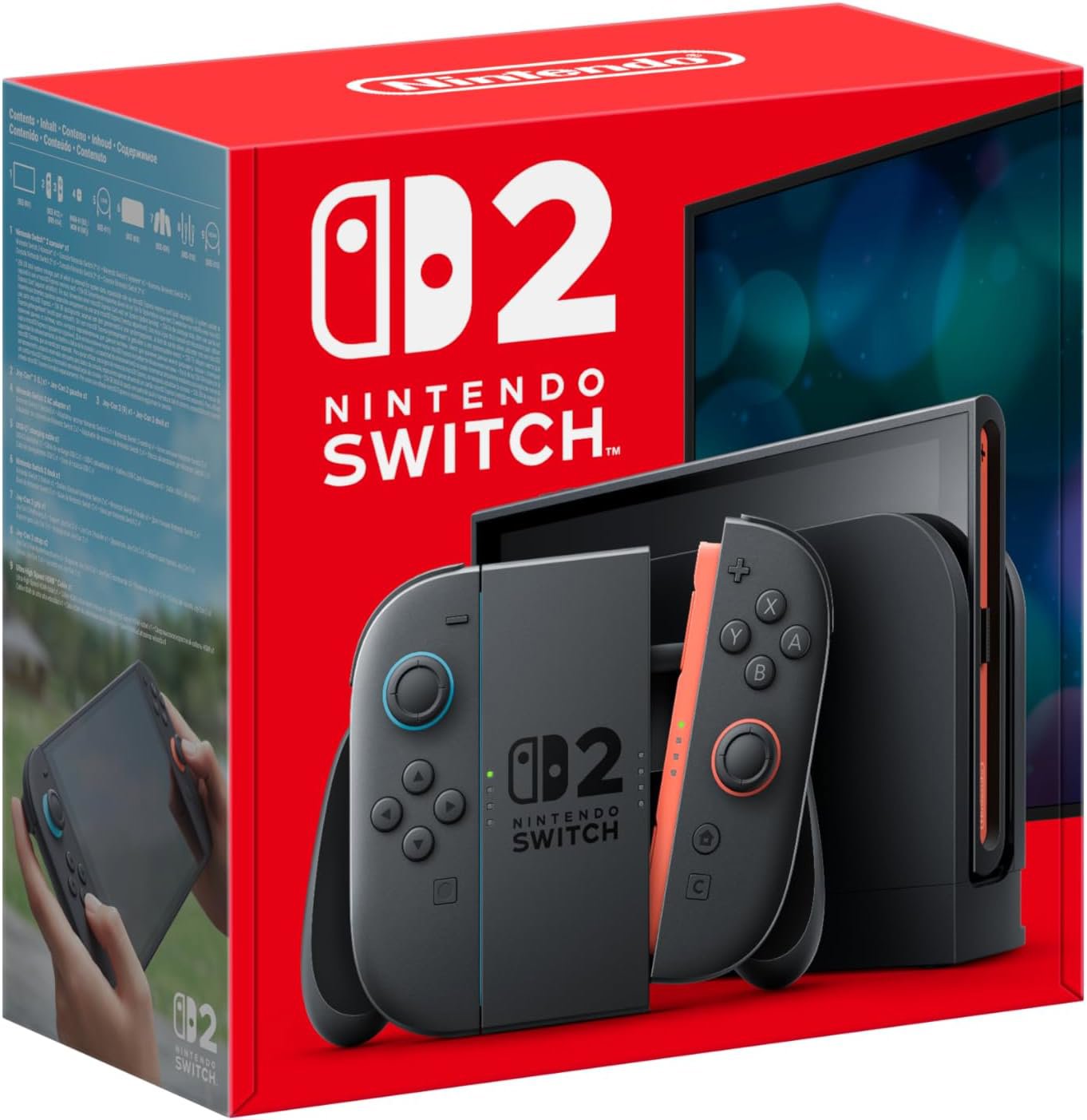
Nintendo has finally dropped the Nintendo Switch 2, the console that the internet spent years obsessing over under the codename Project Helix. As someone who has probably spent more on Nintendo plastic than I have on my pension, I approached this with my usual healthy dose of skepticism. Does it finally provide the power we crave, or is it just another attempt to sell us a slightly faster screen while we pretend we are not all just playing Mario Kart?
Out of the box, it feels like a Switch that went to the gym. It is still the same hybrid concept, but everything feels a bit more, well, mature. The build quality is decent, and the magnetic connectors for the new Joy-Con 2 controllers are a nice touch, even if I suspect they will eventually end up covered in pocket lint. It feels sturdy, which is good, because I have dropped more consoles than I care to admit to my bank manager.
The spec sheet is always where the marketing fluff gets thick. They claim 4K, they claim 120 fps, and they claim it is the next evolution. Reality says another thing entirely. Yes, it can hit 4K, but only if your TV is up to the task and the game is optimized for it. And if you think you are getting 4K at 120 fps while playing on the bus, you might need to adjust your expectations. It is a handheld, not a liquid-cooled PC rig.
That being said, the performance bump is noticeable. Loading times are snappier, and the display is a genuine step up in clarity. It does not have the deep, moody blacks of an OLED screen, which feels like a slight regression for those of us who grew accustomed to the previous model's vibrancy, but the color reproduction is surprisingly punchy. It is an LCD panel that actually looks like it belongs in this decade.
The software experience remains that familiar, slick
Nintendo interface. It is easy to navigate, hard to get lost in, and mostly free of the bloat that plagues other platforms. It is a console for people who just want to turn it on and play, rather than spending three hours updating firmware and drivers. In a world where every gadget feels like a chore, there is something to be said for that simplicity.
Features that might actually matter
Let's talk about the new gimmicks. The Joy-Con 2 controllers now function as mice in certain games, which is the kind of feature I will use exactly once before forgetting it exists. The 'C Button' for GameChat is another addition. It is a clear attempt to modernize the
Nintendo multiplayer experience, which has traditionally been about as social as a hermit crab. It works well enough, assuming you can convince your friends to actually use the system.
The camera features for video chat feel like a late entry to the party. We are years into the video calling era, so having it as an optional peripheral is fine, but I struggle to see the scenario where I am playing a game and think, 'You know what this needs? A face-to-face chat.' Still, for families, it might have some utility. It is a 'check-the-box' feature rather than a game-changer.
Then there is the battery life. Ah, the eternal Achilles' heel of the handheld gamer. Under the hood, this thing is working harder than its predecessor to push those higher frame rates and resolutions. In high-powered titles, you are looking at a couple of hours before you are hunting for a charging cable. It is better than it used to be, sure, but it is still a 'bring a power bank or suffer the consequences' situation. If you are playing at home, you will just leave it in the dock, effectively turning it into a home console that occasionally travels to the bedroom.