2kWh Power Stations Showdown: Seven Beasts Battle for Basecamp Supremacy
Portable power stations7 produits
Ce comparatif n’est pas encore traduit : il s’affiche en anglais.
Verdict express
Which 2kWh Beast Will Keep Your Basecamp Alive?
Seven powerful contenders in the 2kWh portable power station arena, each packing roughly 2,000-2,400Wh of LiFePO4 muscle into wildly different packages. We've strapped them into the arena to find which one deserves a spot in your expedition kit, whether you're weathering a week-long power outage, powering a remote campsite, or keeping your RV fridge from turning into a science experiment.
CapacityAll pack roughly the same capacity; EBL trails slightly at 1,843Wh, enough for most use cases but less margin for error on extended trips.
2,010Wh
2,048Wh
2,048Wh
2,048Wh
2,042Wh
1,843.2Wh
2,048Wh
Continuous AC OutputAFERIY P280 punches hardest at 2,800W continuous; Anker S2000 lags at 1,500W, limiting simultaneous appliance use on heavy loads.
1,500W
2,200W
2,400W
2,400W
2,200W
2,400W
2,800W (gagnant)
Peak PowerAFERIY crushes it at 5,600W peak; Anker C2000 Gen 2 offers respectable 4,000W for power tool runs and AC units.
3,000W
3,300W
2,400W
4,000W
2,200W
2,400W
5,600W (gagnant)
WeightGROWATT INFINITY 2000 Pro featherweights in at 26 lbs, nearly half the heft of competitors, making it trail-friendly without sacrificing capacity.
35.7 lbs
41 lbs
26 lbs (gagnant)
41.7 lbs
39.5 lbs
55 lbs
44 lbs
Charge Speed (AC)AFERIY P280 screams to 80% in 38 minutes; Dabbsson hits full charge in 60 minutes, both dramatically faster than the Jackery's 66-minute crawl.
Not listed
1 hour
Not listed
58 minutes
66 minutes
Not listed
38 minutes (gagnant)
Solar Input (Max)AFERIY's 1,200W dual-input solar is a solar fanatic's dream; Dabbsson and Anker C2000 Gen 2 offer solid 800W MPPT for serious off-grid missions.
400W
800W MPPT
Not listed
800W
400W
Not listed
1,200W dual PV (gagnant)
Fridge Runtime (Claimed)Anker S2000's claimed 35-hour fridge runtime leads the pack; real-world reviews suggest 24-27 hours is more realistic, but still solid endurance for basecamp.
35 hours (gagnant)
22.5 hours
Not listed
32 hours
1 hour (sic)
Not listed
Not listed
Produit par produit
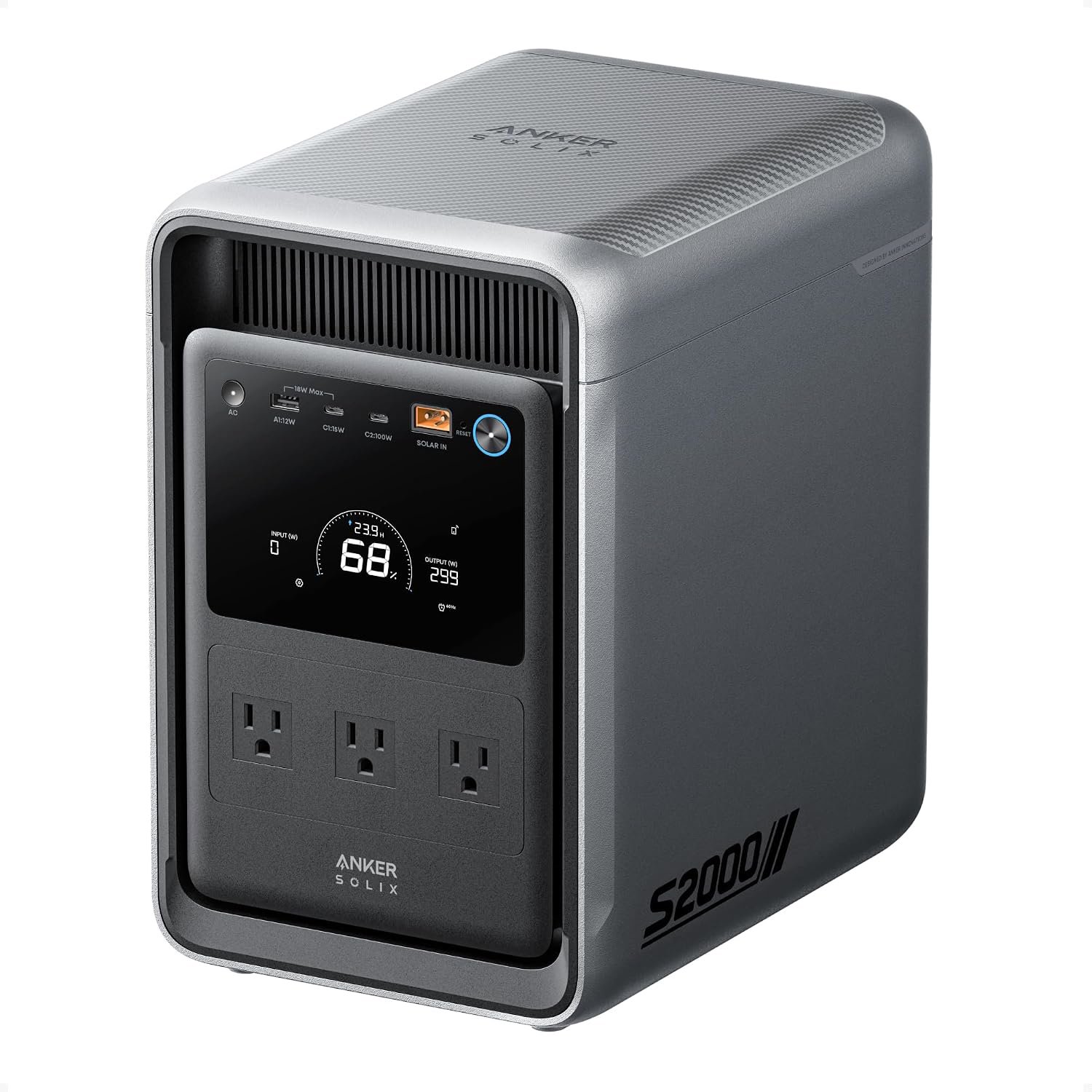
Anker SOLIX S2000Notre choix
Home backup, fridge-first priority
The efficiency champion: Anker's S2000 claims 35-hour fridge runtime thanks to ultra-low 6W idle draw and 10% higher efficiency than peers. Real users confirm 24-27 hours keeping fridges alive through multi-day outages, making it the go-to for stationary basecamp duty.
Ce qu’on a aimé 👍
Ultra-compact at 35.7 lbs
LiFePO4 lasts 10,000 cycles
Dual-sided outlets, cleaner setup
Excellent customer reviews
Ce qui pourrait être mieux 👎
Only 1,500W continuous output
400W solar input trails competitors
No 12V DC port
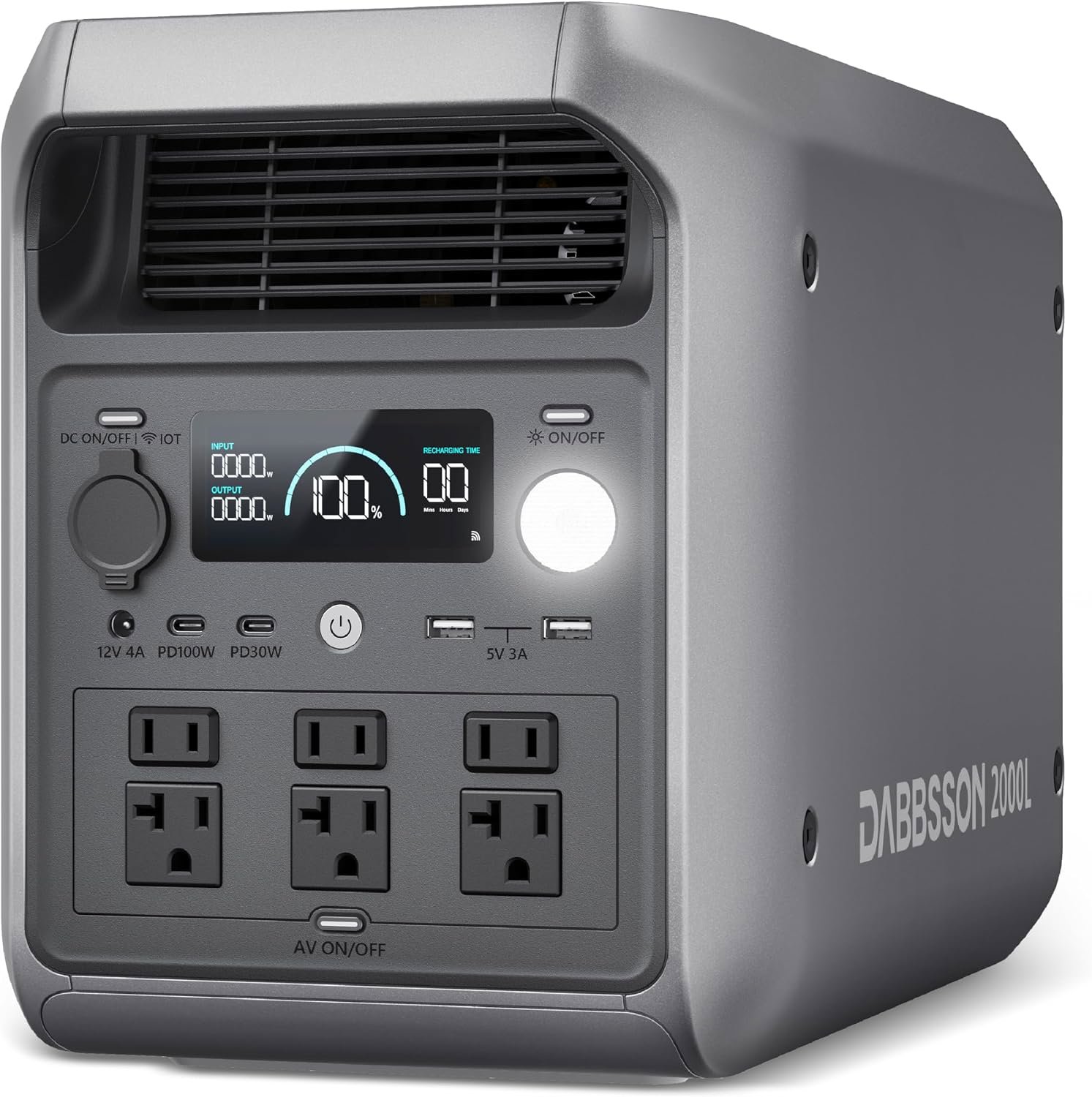
Dabbsson 2000L
All-purpose campers, RV trips
The balanced bruiser: 2,200W continuous output and 3,300W surge in a 41-pound package that recharges to full in 60 minutes flat. Semi-solid LiFePO4 tech adds durability; 800W solar input powers serious off-grid dreams without breaking a sweat.
Ce qu’on a aimé 👍
1-hour full AC charge
800W solar MPPT charging
3,300W peak for power tools
5-year warranty coverage
Ce qui pourrait être mieux 👎
41 lbs, noticeably heavier
1.3x runtime claim unverified
Limited customer reviews vs Anker
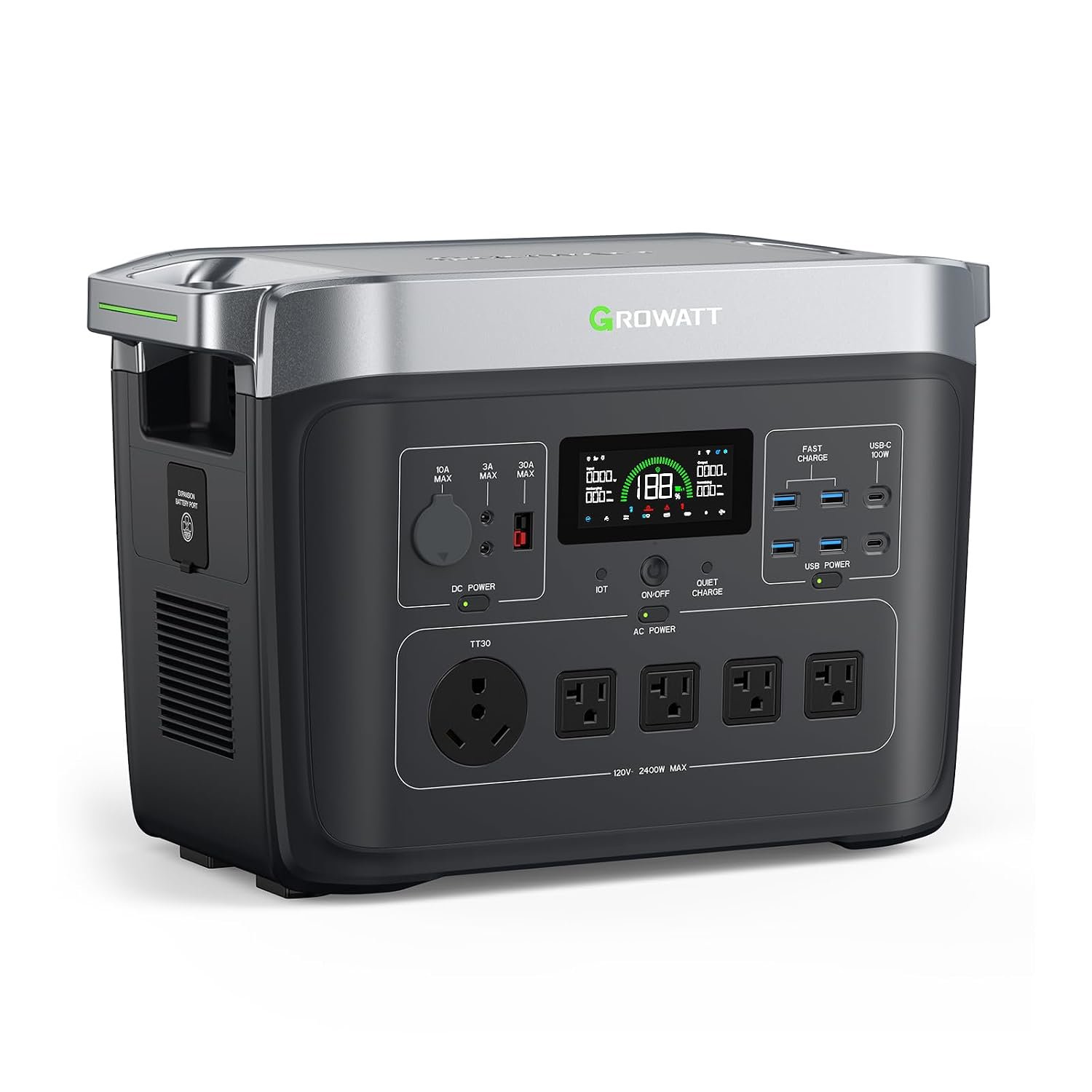
GROWATT INFINITY 2000 Pro
Ultralight backpackers, RV downsizers
The featherweight: At just 26 lbs, this is the lightest 2kWh on the list, making it trail-hikers' dream fuel. Cold Start tech keeps it running in sub-zero conditions; expandable to 6,144Wh with extra batteries for longer expeditions.
Ce qu’on a aimé 👍
Lightest at 26 lbs
Cold Start tech for winter
Expandable to 6,144Wh
15ms EPS switchover
Ce qui pourrait être mieux 👎
2,400W output is mid-pack
Expansion battery sold separately
Some reliability reports online
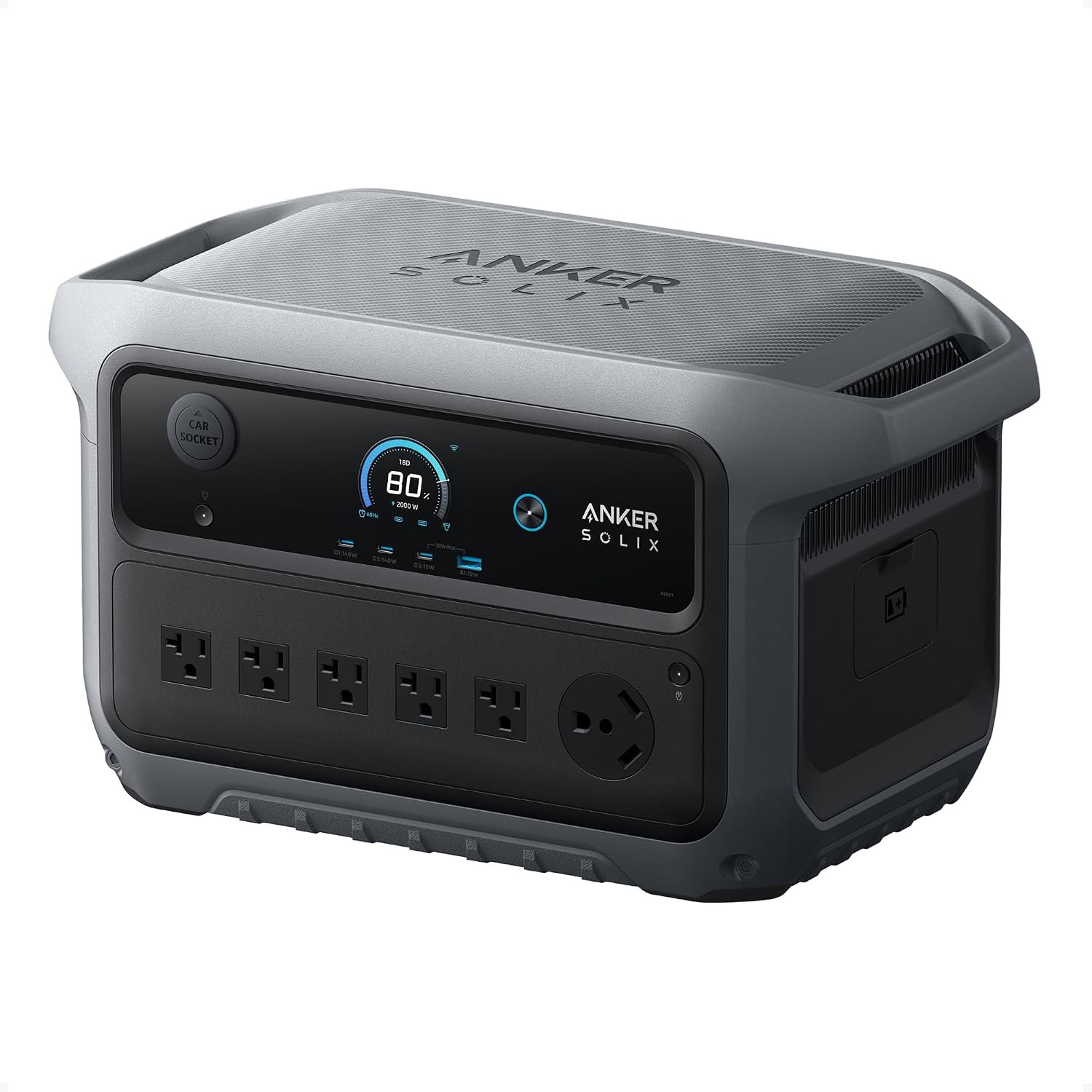
Anker SOLIX C2000 Gen 2
RV owners, fast-charge seekers
The charging speed demon: Full recharge in 58 minutes on AC, or 3 hours via 800W car charging while you drive, pure convenience for mobile basecamp. 4,000W peak crushes RV AC units and power tools; expandable to 4kWh capacity.
Ce qu’on a aimé 👍
58-minute full AC recharge
800W alternator charging in car
4,000W peak power output
32-hour fridge runtime claimed
Ce qui pourrait être mieux 👎
41.7 lbs on the chunky side
Limited to 800W solar input
Pricier than some rivals
Jackery Explorer 2000 v2
Portable homebase, compact seekers
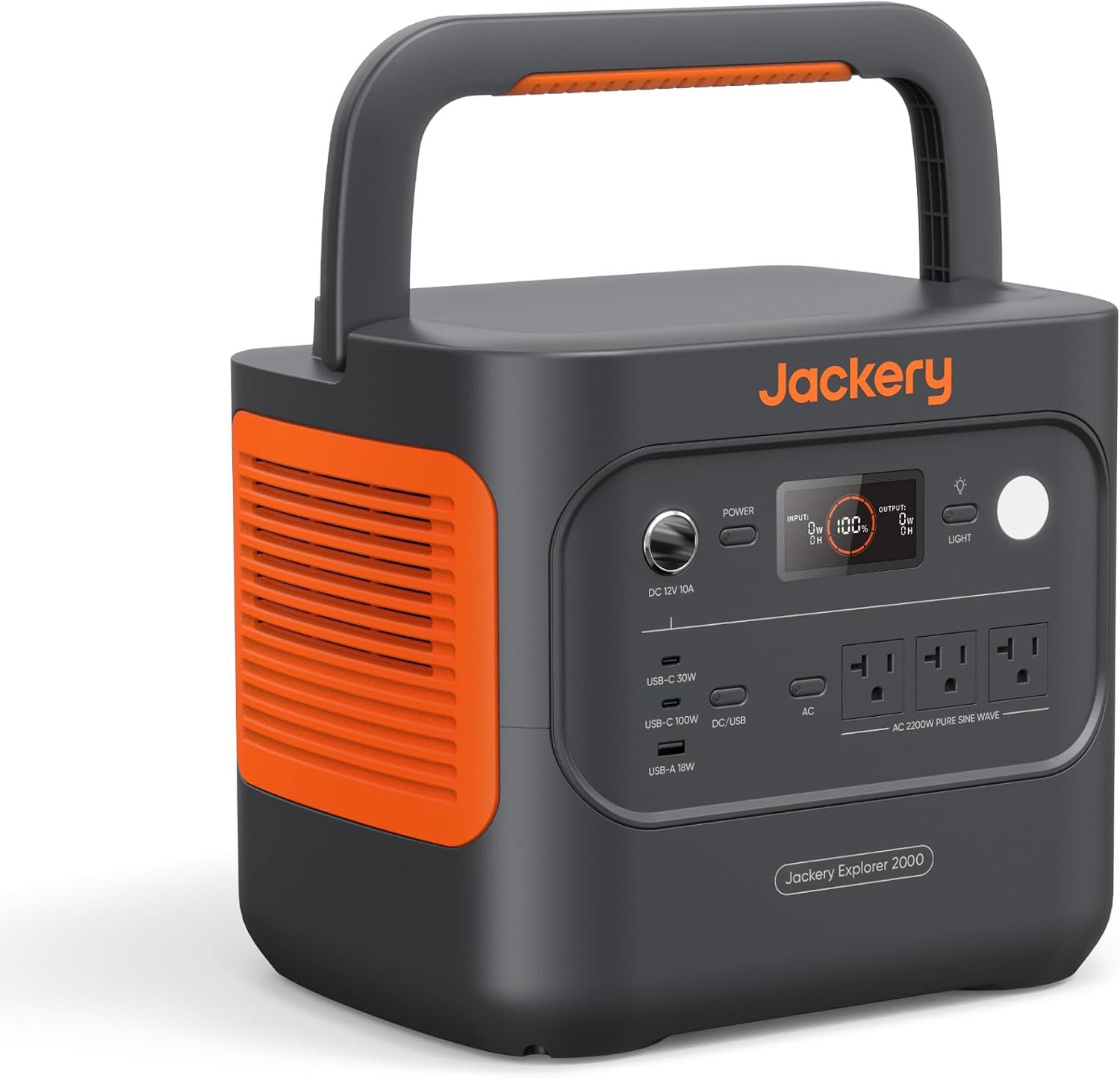
The lightweight option: 39.5 lbs and 34% smaller than typical 2kWh competitors, plus 2,200W continuous output handles most appliances. 66-minute charge speed and UPS-certified switching keep essentials running through blackouts.
Ce qu’on a aimé 👍
39.5 lbs, lighter than most
20ms seamless UPS switching
2,200W continuous output
10-year LiFePO4 lifespan
Ce qui pourrait être mieux 👎
66-minute charge slower than rivals
Only 400W solar input
Bluetooth connectivity issues reported
EBL Acc2400Meilleur rapport qualité-prix
Budget-conscious campers
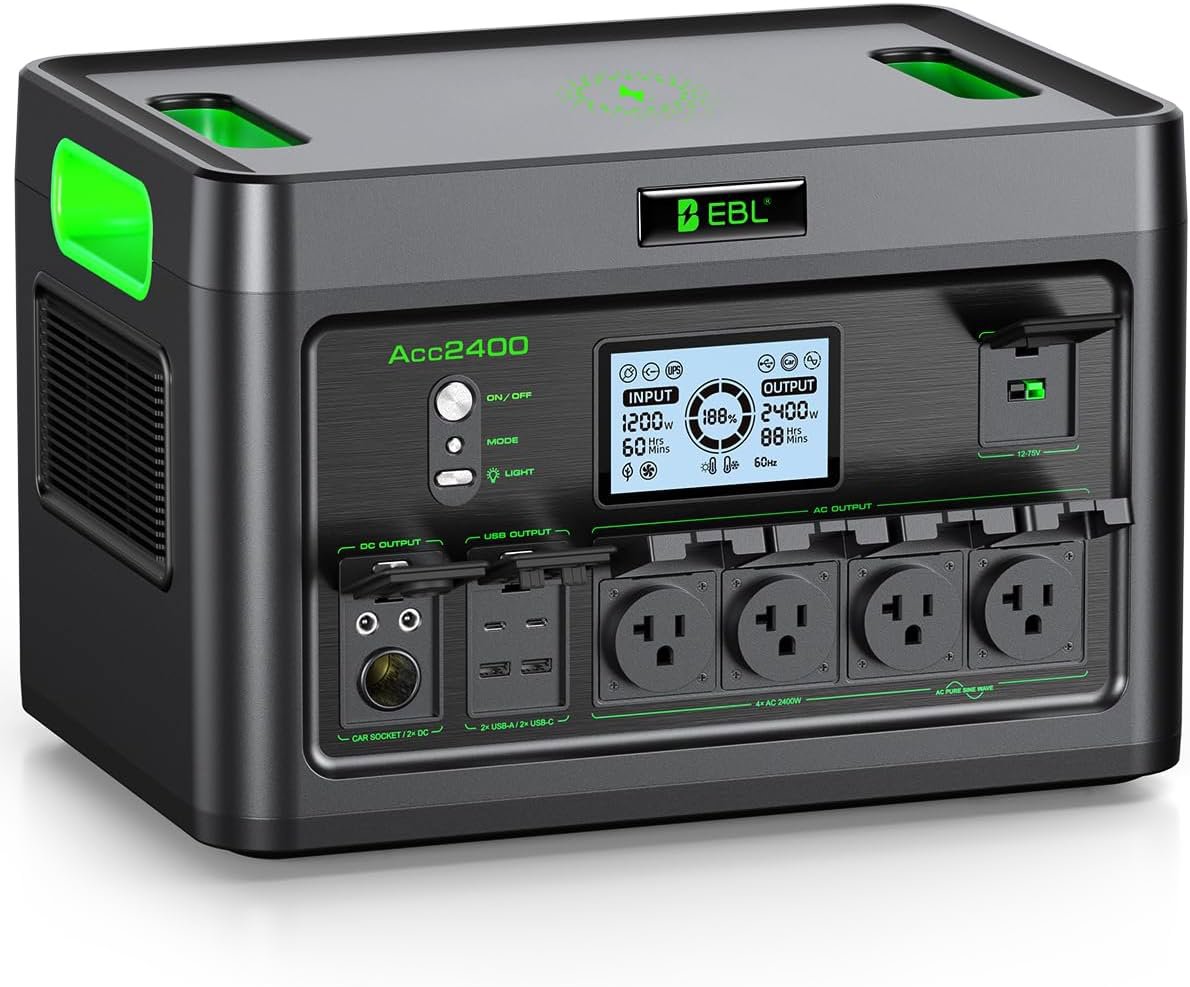
The value play: 2,400W output and 12-device simultaneous charging at the lowest entry price keeps group trips and job sites humming. LiFePO4 battery survives 3,500+ cycles; compact form factor hides respectable capability.
Ce qu’on a aimé 👍
Lowest price point
2,400W continuous output
12-device simultaneous charging
10+ year service life
Ce qui pourrait être mieux 👎
55 lbs, heaviest on the list
1,843Wh capacity trails peers
Sparse solar input details
AFERIY P280
Power-hungry users, off-gridders
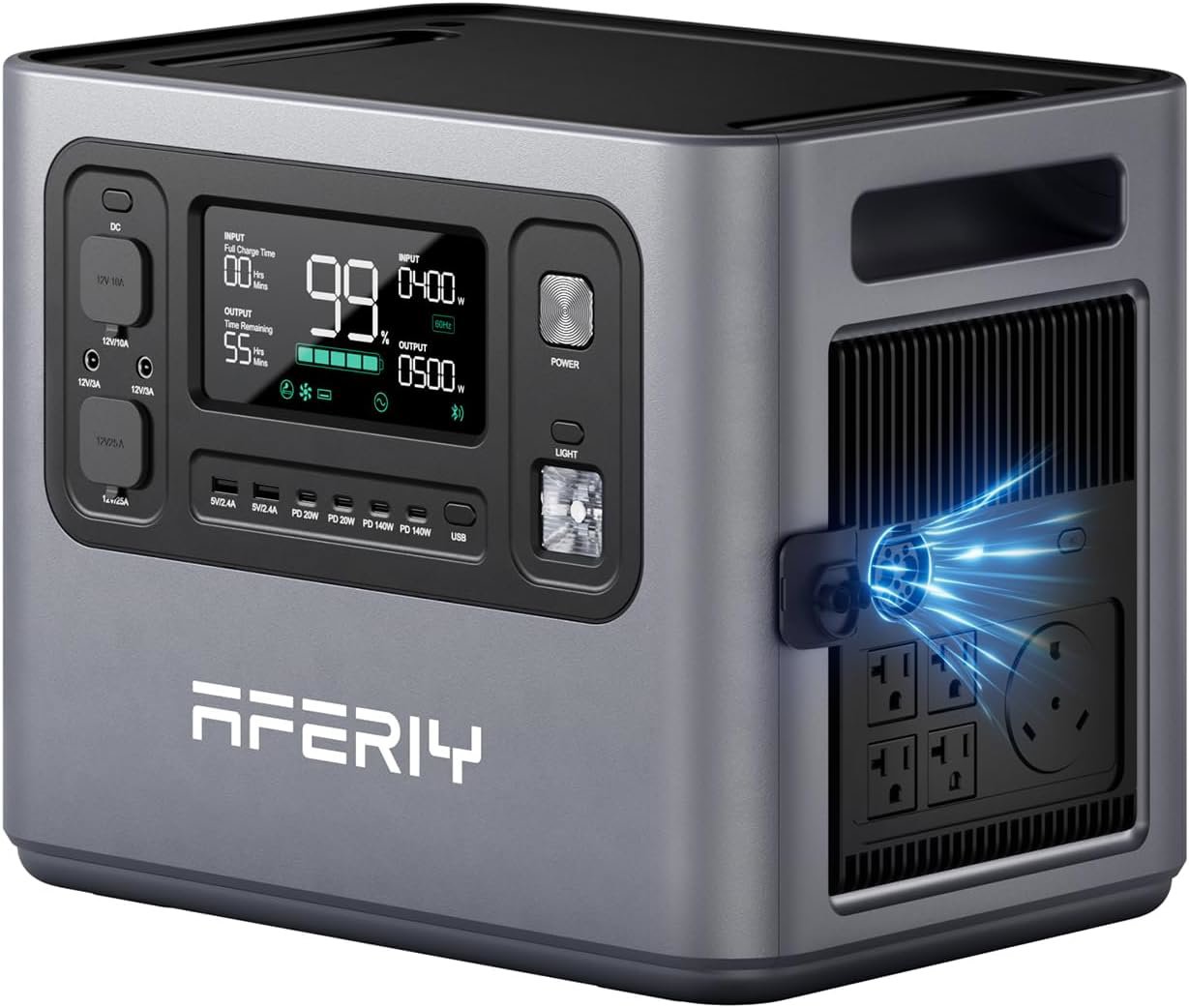
The raw power champion: 2,800W continuous, 5,600W peak, and 1,200W dual solar input make this the alpha predator for serious loads. Blazing 38-minute charge and expandable to 10.24kWh unlock next-level freedom.
Ce qu’on a aimé 👍
2,800W continuous output
5,600W peak power
38-minute ultra-fast charge
1,200W dual solar input
Ce qui pourrait être mieux 👎
44 lbs moderately heavy
App has privacy concerns
Smaller customer review base
The Weight vs. Power Paradox: Where Gear Philosophy Clashes
Here's where expedition dreams meet hard reality: the GROWATT INFINITY 2000 Pro tips the scales at a featherweight 26 lbs, nearly half the heft of the EBL Acc2400 at 55 lbs. That's a 29-pound difference on your back over a multi-day trek. Yet the EBL packs 2,400W continuous output versus GROWATT's 2,400W, making them power-wise equals on paper. The Anker S2000 splits the difference at 35.7 lbs with only 1,500W continuous, while the AFERIY P280 weighs 44 lbs but roars with 2,800W, the kind of tradeoff that depends entirely on whether you're alpine climbing or car camping.
Charging speed creates another fault line. The AFERIY P280 screams to 80% in 38 minutes; the Dabbsson 2000L hits full charge in 60 minutes flat; the Anker C2000 Gen 2 does 58 minutes on AC alone. If you're racing a storm or need juice between gigs, these three are worth every penny. The Jackery Explorer 2000 v2 stretches to 66 minutes, and the Anker S2000 doesn't publish a time, a red flag if fast turnaround matters. For off-grid solar missions, the AFERIY's 1,200W dual-input and the Dabbsson's 800W MPPT are genuinely future-proof; anything below 400W feels like leaving energy on the table in 2024.
Peak Power Tells the Real Story: What Actually Runs Your Gear
All of these claim roughly the same capacity, 2,000-2,048Wh, but peak power reveals the hierarchy. The AFERIY P280 hits 5,600W peak; the Anker C2000 Gen 2 delivers 4,000W; the Dabbsson and EBL manage 3,300W and 2,400W respectively. The Anker S2000 tops out at 3,000W peak but only 1,500W continuous, a neutered ceiling that will choke on simultaneous appliances. Real talk: if you're running a 15-amp window AC unit (1,800W) plus charging a laptop (100W) plus keeping a fridge alive (600W), you need at least 2,500W continuous. The S2000 simply won't cut it. The AFERIY, Dabbsson, and EBL all sail past that threshold comfortably; the Jackery and Anker C2000 Gen 2 are solid middle ground.
Runtime claims deserve skepticism. The Anker S2000 claims 35 hours powering a fridge, but real users report 24-27 hours, still industry-leading but a 20-30% gap between marketing and reality. The Dabbsson claims 22.5 hours; Anker C2000 Gen 2 says 32 hours; most others don't publish numbers. Real-world fridge draw depends on how often the compressor cycles, ambient temperature, and model efficiency, so take all claims with a grain of salt and lean on verified customer reviews, where available.
Your Basecamp Needs a Champion, Here's Who Wins What
If home backup is your religion and fridge-keeping is the sacrament, the Anker SOLIX S2000 is your altar. Its ultra-low idle draw and real-world 24-27 hour fridge runtime outpace everything else, and the compact 35.7-pound frame doesn't punish your back. Customers praise it for surviving multi-day outages without drama. The five-star reviews speak louder than any spec sheet, this is the unit for stationary power-outage warriors who want set-it-and-forget-it reliability.
For campers who refuse to choose between lightweight and power, the GROWATT INFINITY 2000 Pro is a revelation: 26 lbs with expandable capacity and Cold Start tech for winter expeditions. Backpackers and RV downsizers who hike to their basecamp will weep with gratitude. If you live in a truck or van and demand serious solar recharging, say, 800W+ MPPT, the Dabbsson 2000L or Anker C2000 Gen 2 are the moves; both hit full charge in under an hour on AC and unlock 800W solar input for true off-grid freedom.
Power junkies running air compressors, circular saws, or that RV AC unit need the AFERIY P280: 2,800W continuous, 5,600W peak, 38-minute charge, and 1,200W dual solar input. It's the beast for folks who refuse compromise. On the opposite end, the EBL Acc2400 is the budget basecamp special, lowest price, 2,400W output, and enough capacity for group camping or emergency backup without the premium tax. The Jackery Explorer 2000 v2 sits between all camps: lightweight, balanced, and reliable, if not exceptional at any one thing. Choose it if you can't decide and want a no-regrets Swiss Army knife.
Notre choixAnker SOLIX S2000
Meilleur rapport qualité-prixEBL Acc2400
Prix sur amazon.com au 14 septembre 2026. Les prix peuvent changer.
Information : nous partageons des liens affiliés et pouvons percevoir une commission lorsque vous cliquez dessus.