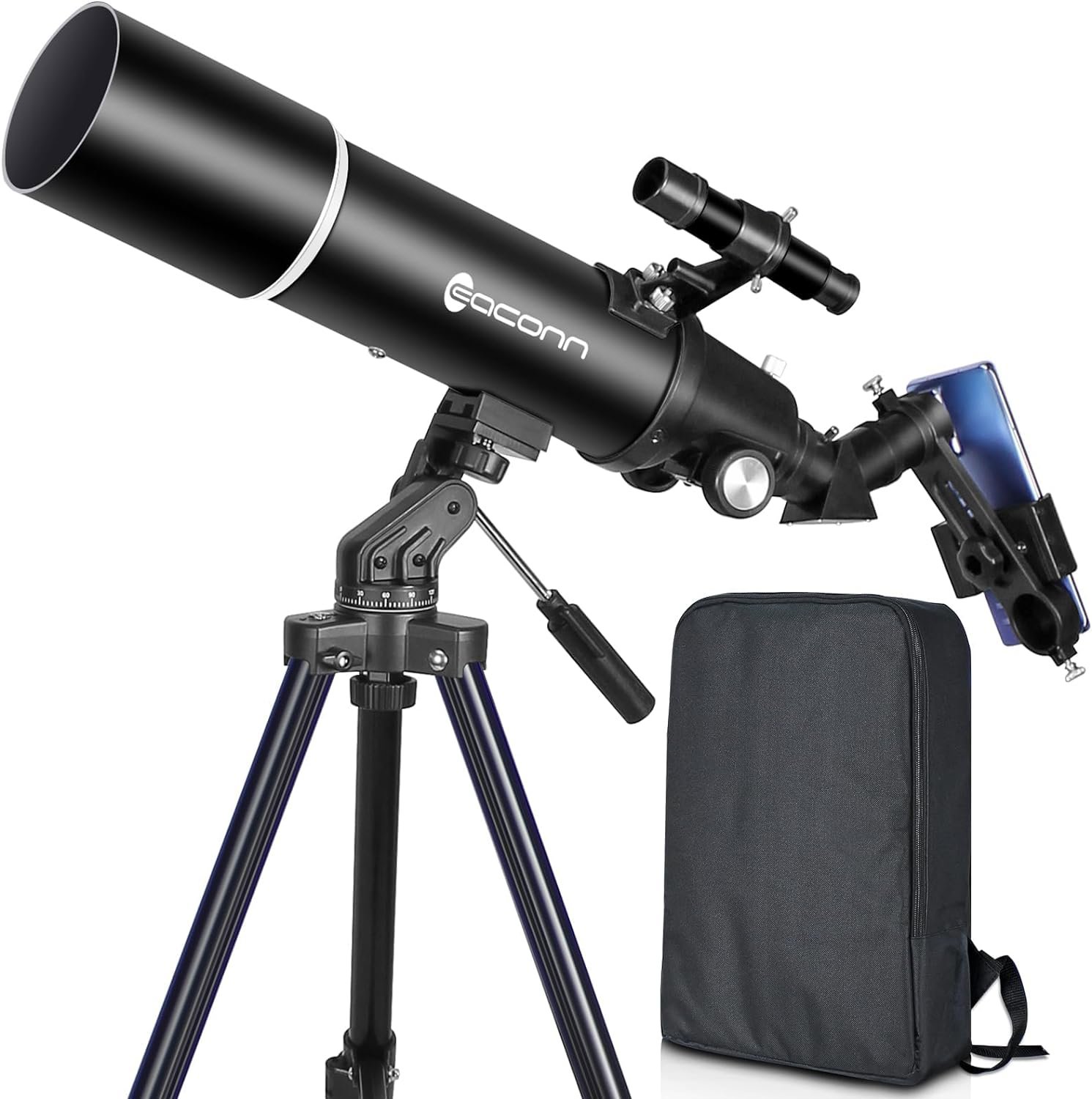
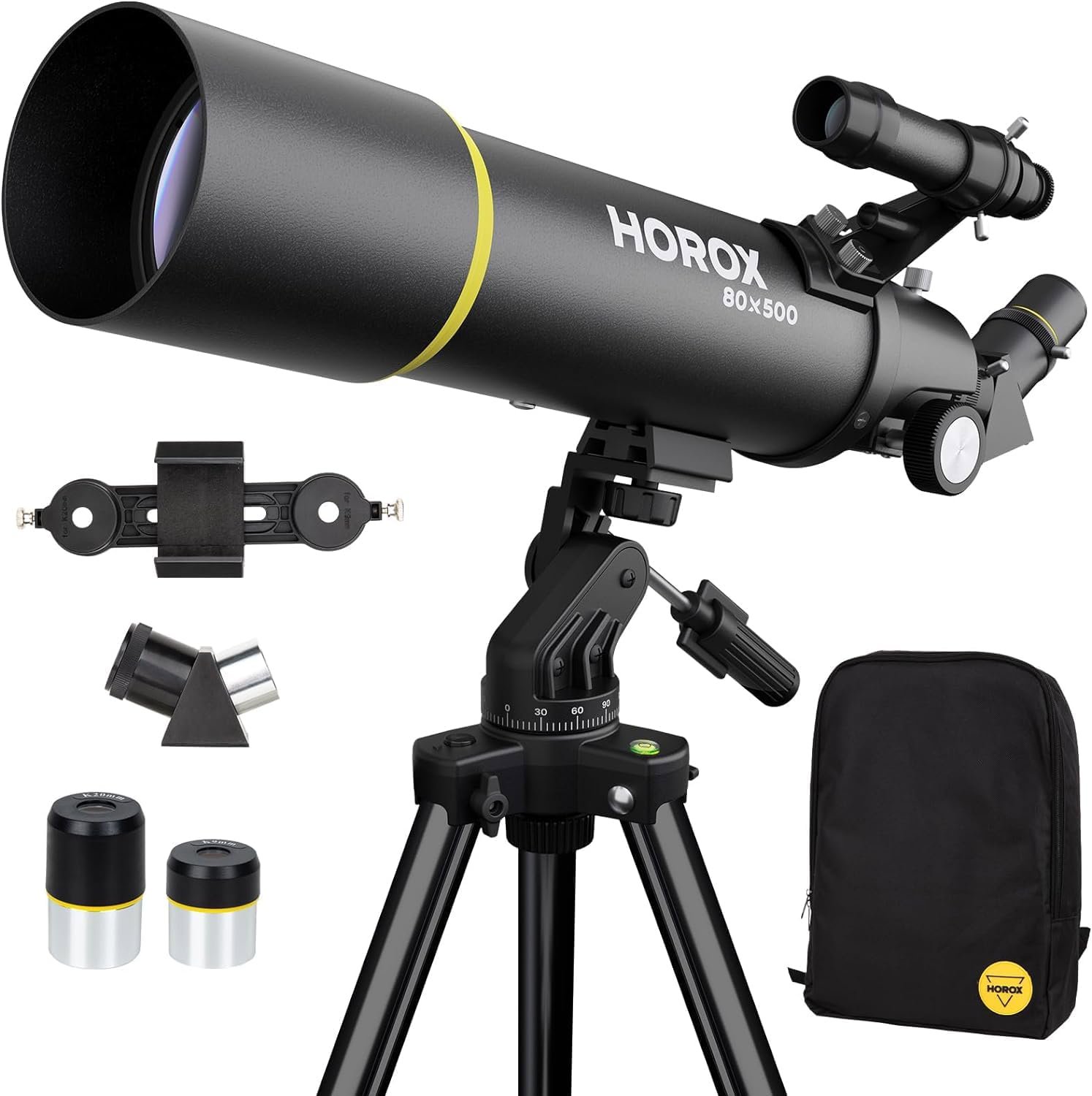
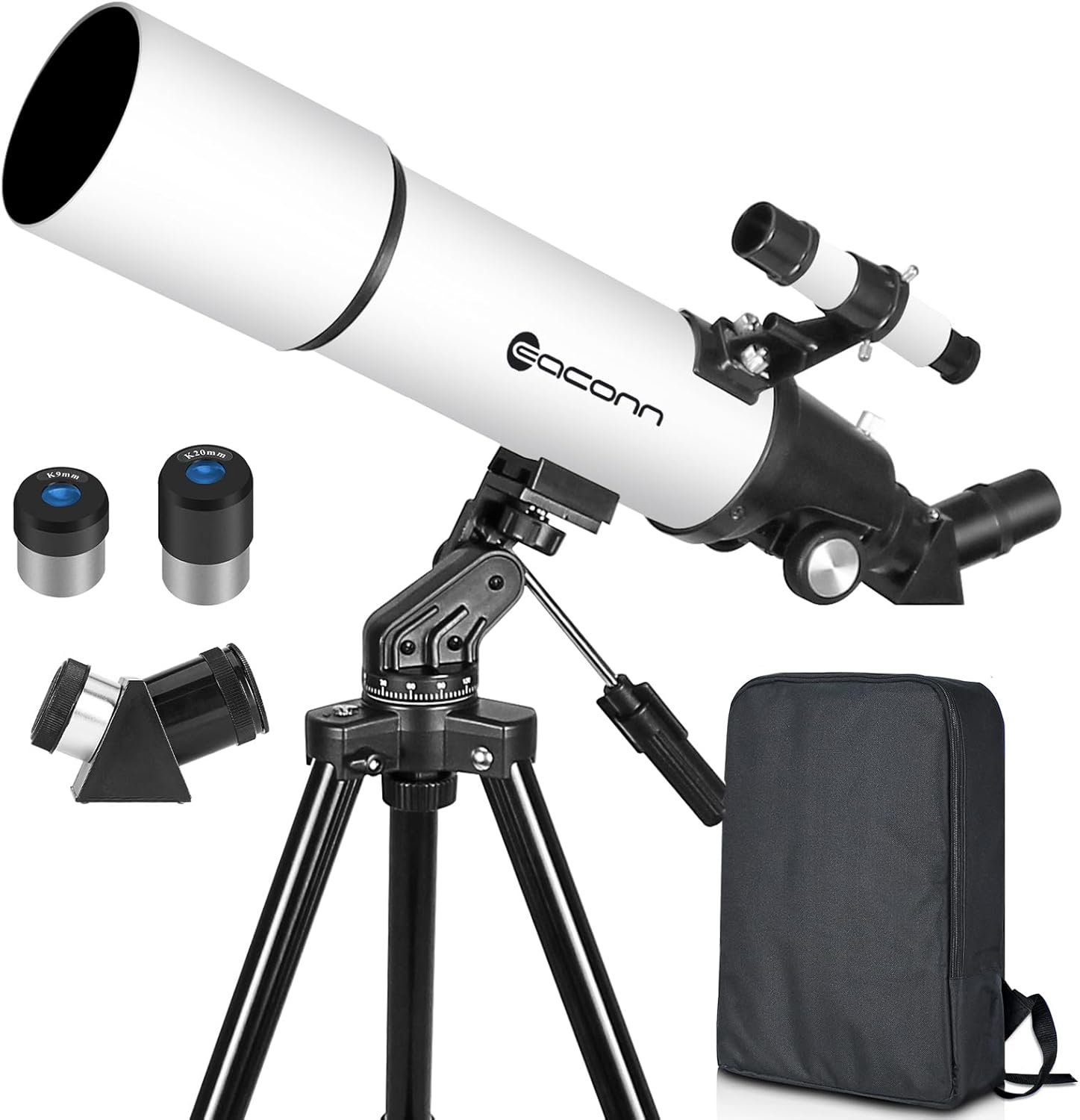
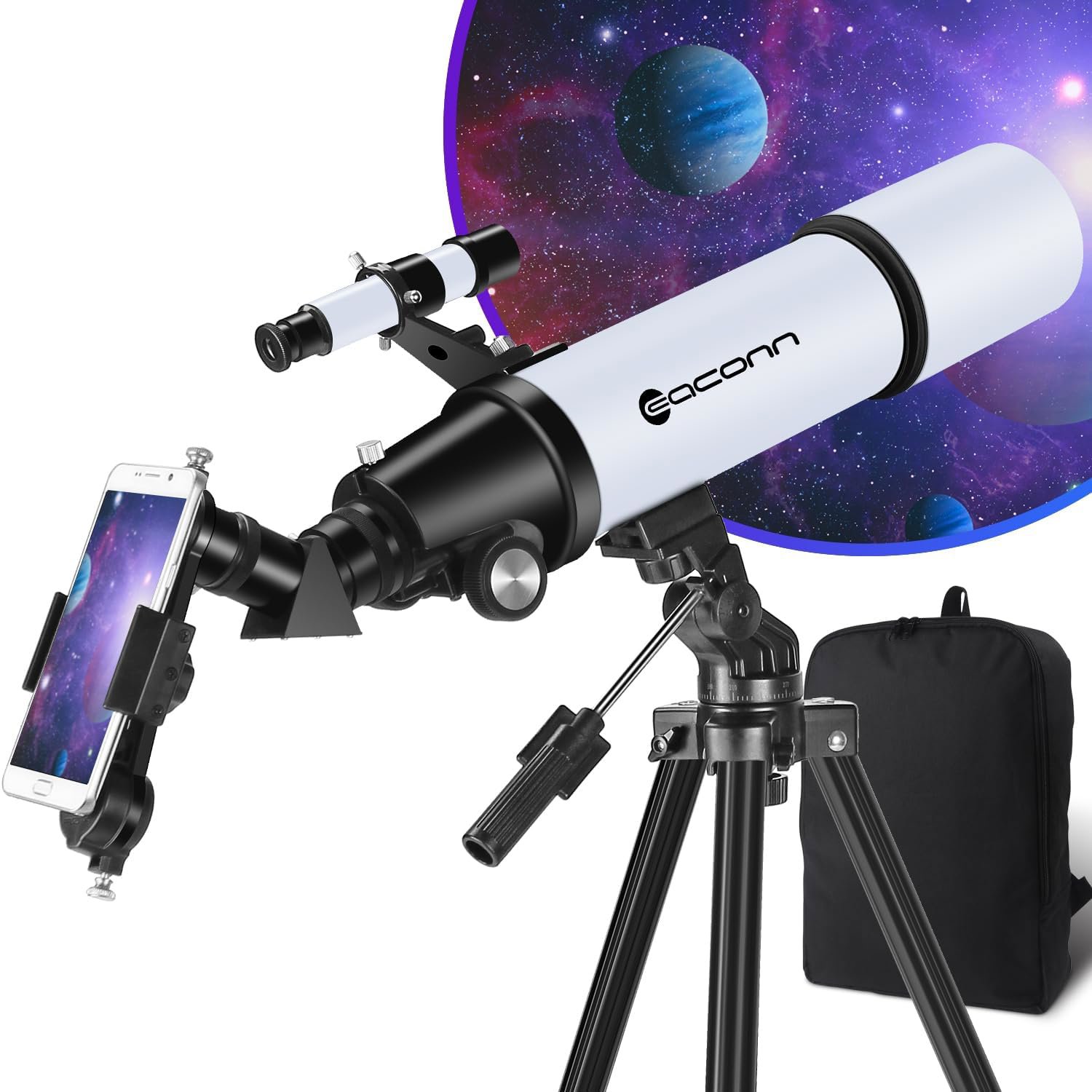
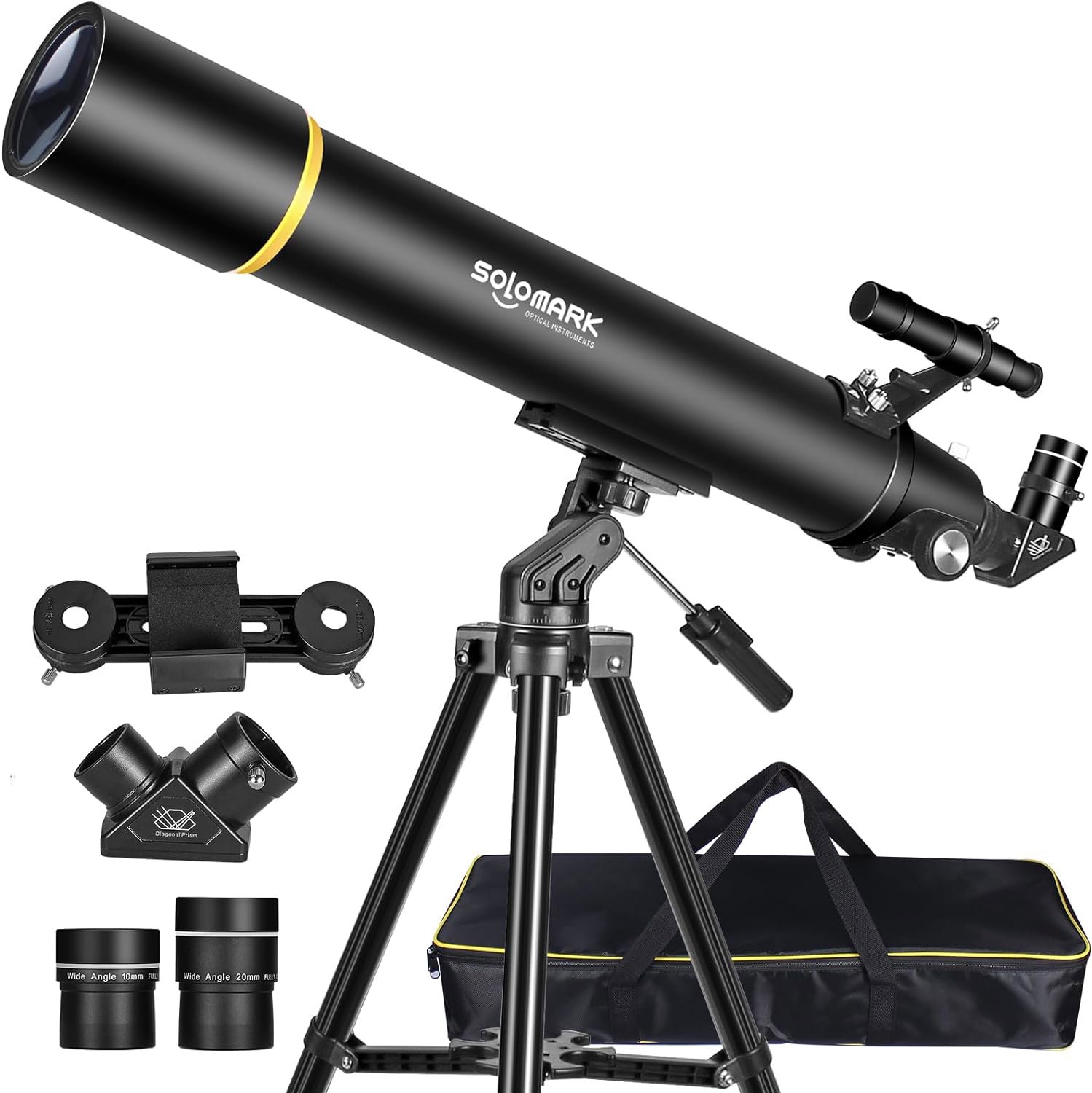
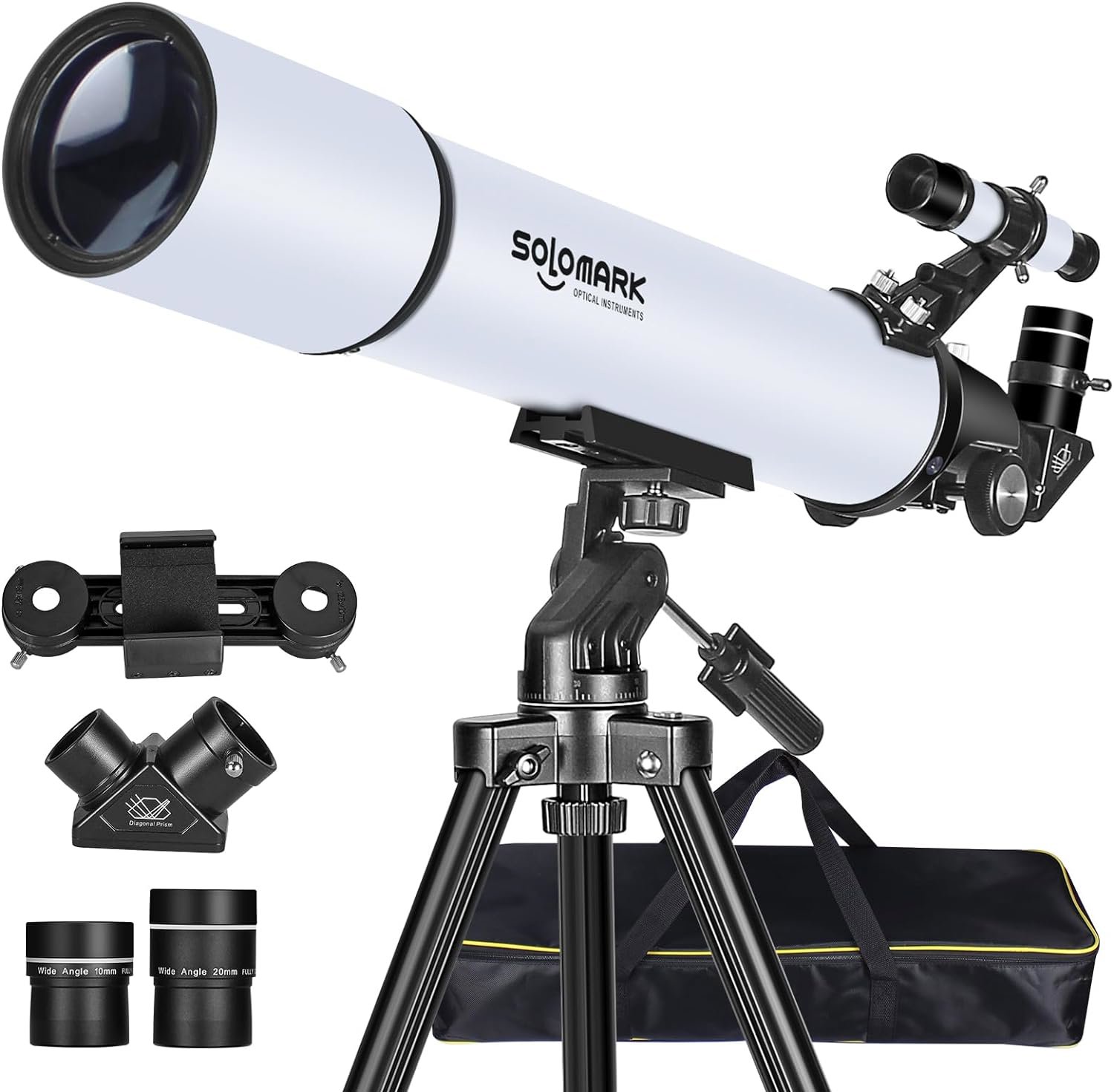
If you want pure portability, the shorter 500mm and 600mm models from EACONN and HOROX are perfect for tossing in a backpack. For those prioritizing raw magnification for planetary viewing, the longer 900mm SOLOMARK models are the superior choice despite the extra bulk.
This version keeps the 900mm performance while adding a solid carrying bag. It is a top choice for those who want to see more than just the moon.
What We Liked 👍
High magnification capabilities
Robust tripod mount
What Could Be Better 👎
Heavier to transport
Requires patience to balance
Size Matters: 500mm vs 600mm vs 900mm
When you are out in the wild, weight and size are your worst enemies. The HOROX 500mm and the various EACONN 600mm models are built for the nomad. They fit neatly into their backpacks, making them the gear of choice for a quick trek to a dark-sky spot or a weekend music festival where you want to show off your gear between sets.
On the flip side, the SOLOMARK 900mm units are the 'expedition' class of this comparison. They are not as easy to toss in a bag, but the extra focal length gives you cleaner, tighter views of planetary features that the shorter tubes struggle to resolve. If you have the space to transport them, they win on raw optical performance.
Stability is Your Best Friend
A telescope is only as good as its mount. Any vibration at high zoom will turn your view of Saturn into a blurry mess. The SOLOMARK tripods feel a notch above in terms of heft and stability compared to the lighter EACONN and HOROX stands. While the lighter tripods are easier to carry, the heavier SOLOMARK mounts make the actual viewing experience much less frustrating when the wind starts to pick up.
The Final Verdict
If your goal is to hike into the backcountry or keep it simple for the kids, go with the HOROX 500mm or the EACONN 600mm models. They are lightweight, portable, and give great initial views of our lunar neighbor.
If you are ready to get serious and have the space for a slightly larger setup, grab the SOLOMARK 900mm. That extra length makes a massive difference for clear, zoomed-in looks at the planets.