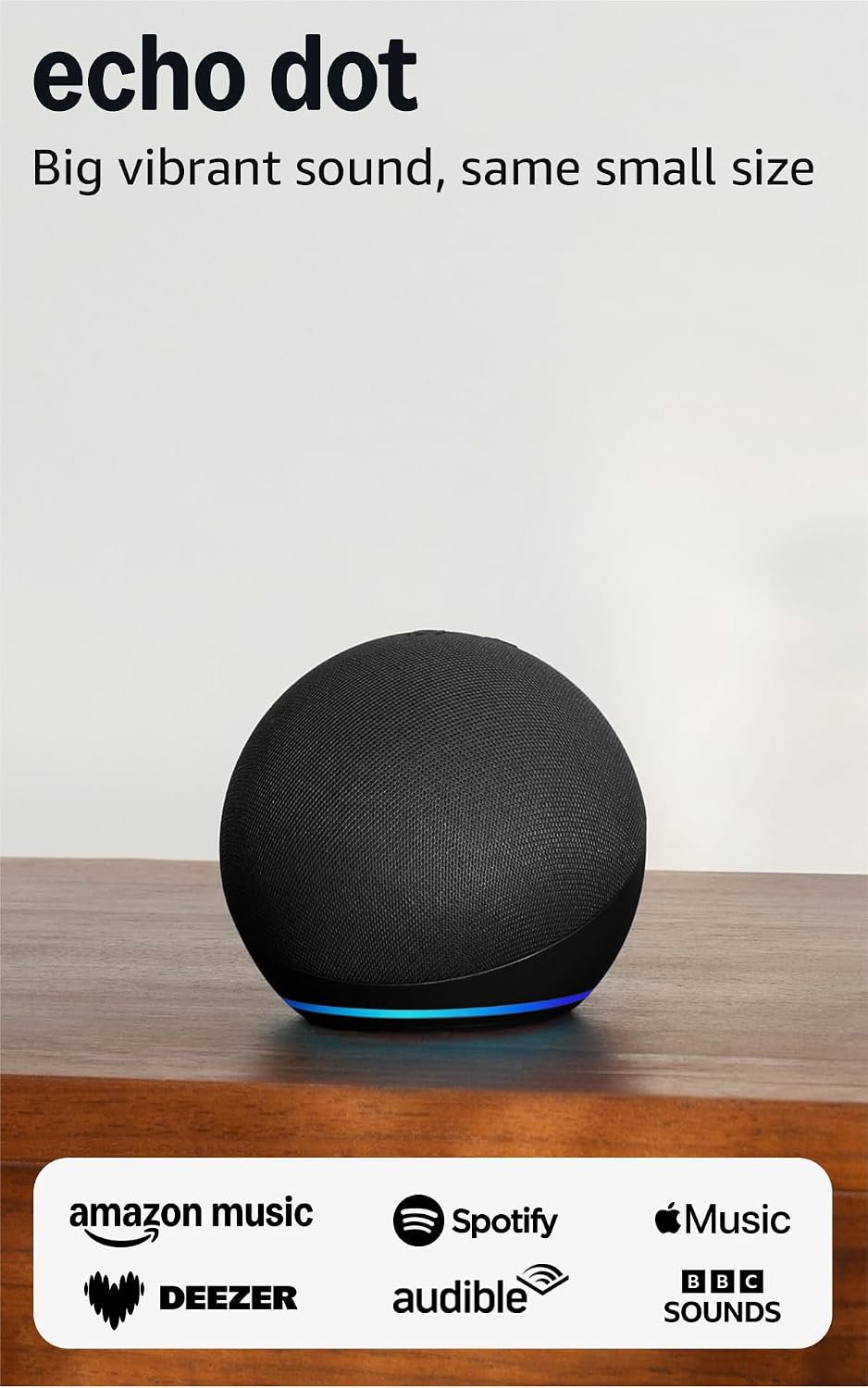
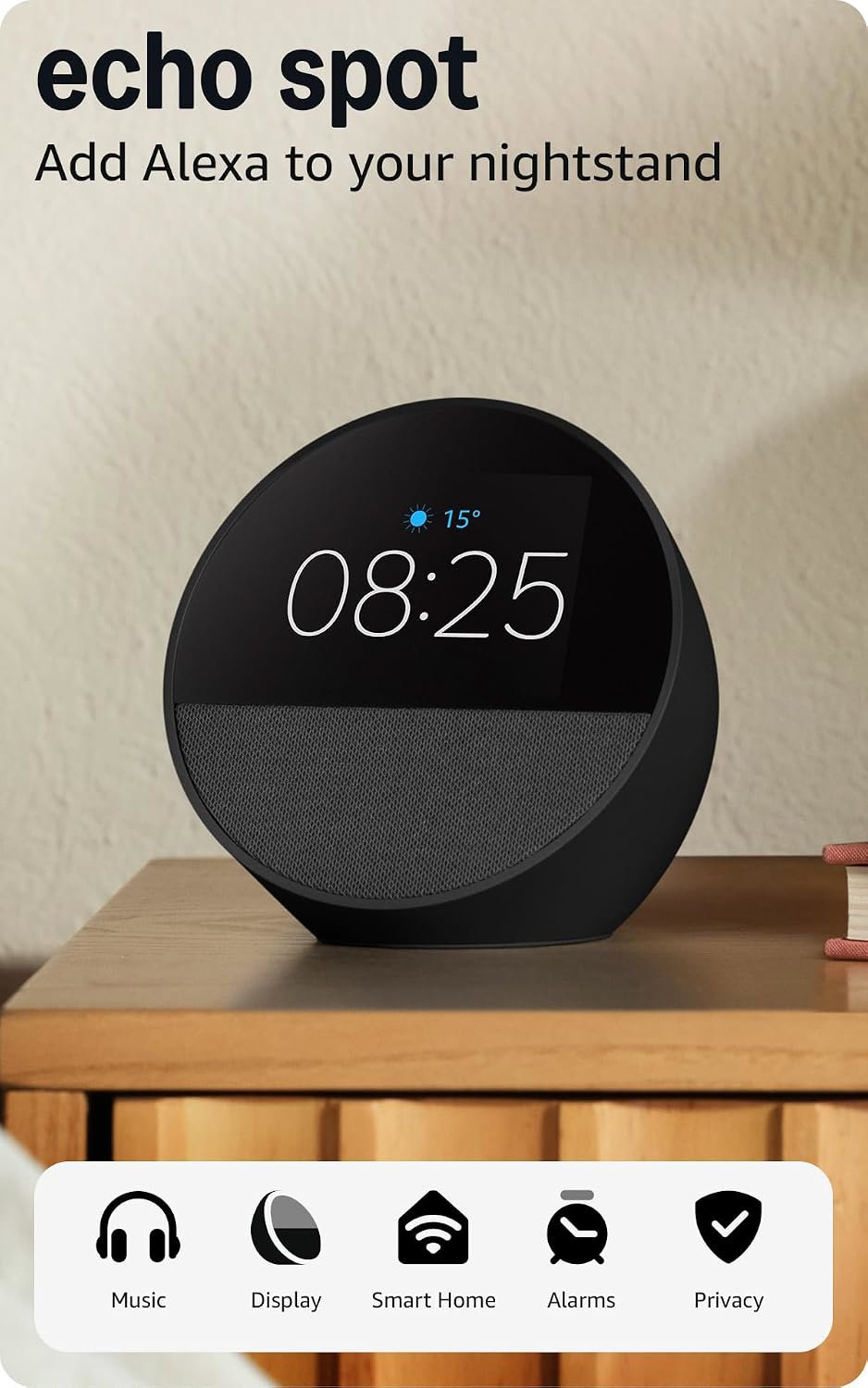
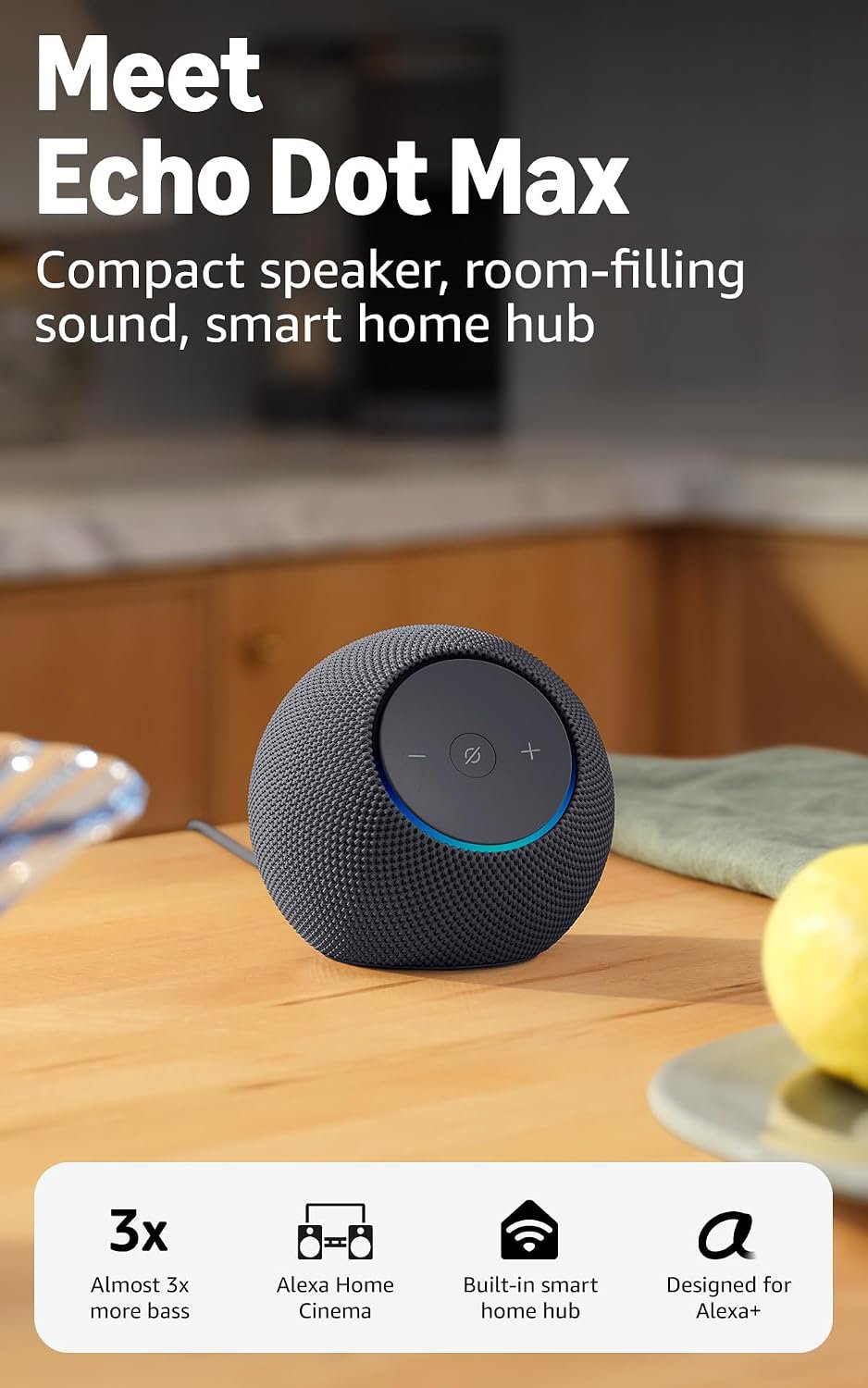
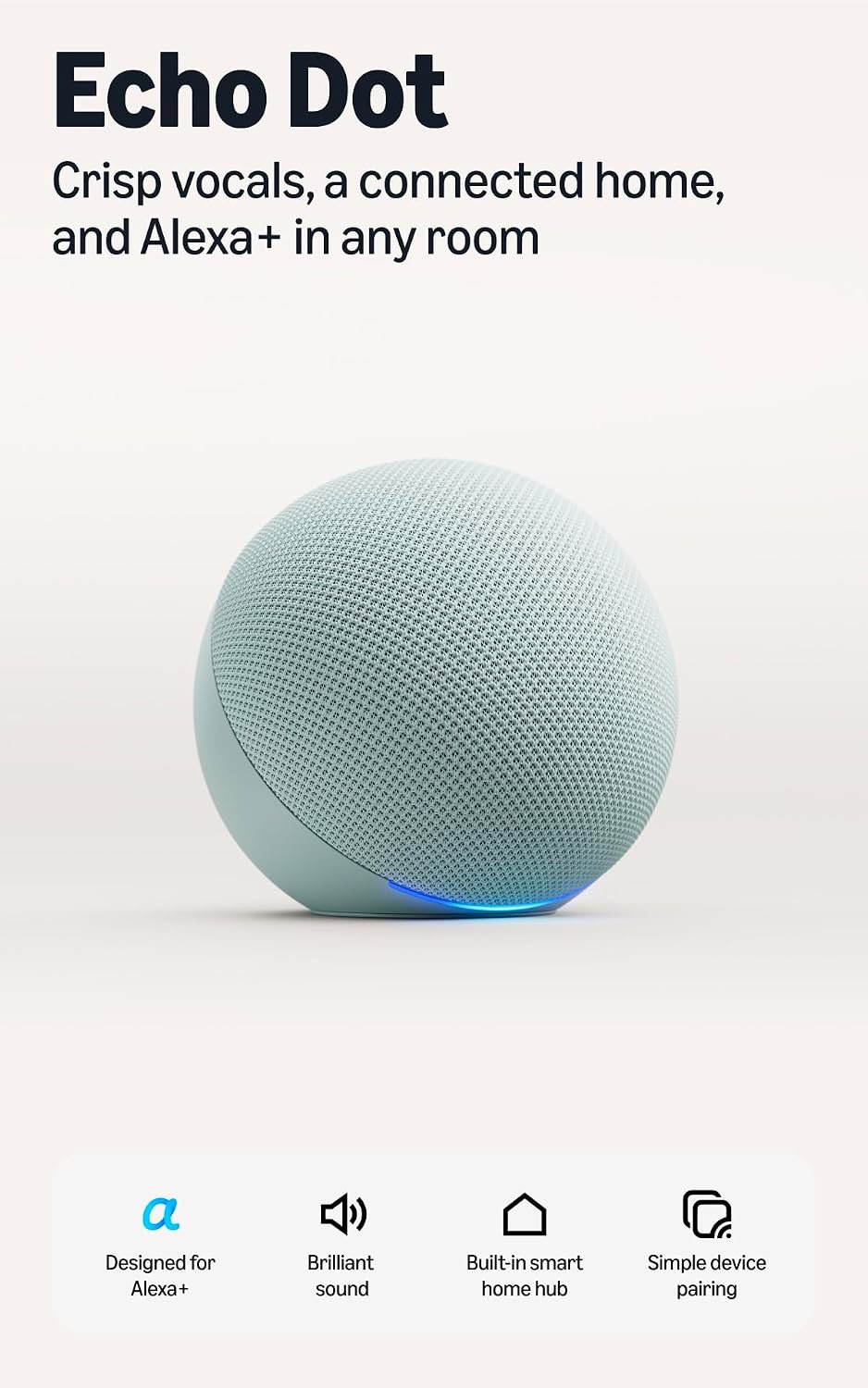
For most, the standard Echo Dot remains the sensible choice. If you need a bedside clock, grab the Echo Spot, while the Echo Dot Max is reserved for those who want slightly more bass in a tiny footprint.
The updated standard model that bridges the gap with better smart connectivity. It is a refinement rather than a revolution.
What We Liked 👍
Decent sound for size
Built-in smart home hub
What Could Be Better 👎
Incremental update over predecessor
Price jump feels steep
Spec sheet bingo
We are looking at a lineup where Amazon tries to solve problems you probably did not know you had. The standard Echo Dot (2022) is the baseline, essentially a smart hockey puck that listens to your commands. The new Echo Dot (newest) and the Max version bring built-in smart home hubs to the table, which is a nice touch if you are tired of juggling Zigbee bridges.
Then there is the Echo Spot. It is not really trying to be a sound system; it is a bedside alarm clock that happens to be able to talk back to you. The screen adds visual utility, but let's be honest, it is mostly for seeing if you are already late for work. Spec sheet says one thing, but your wallet will tell you if the screen is worth the extra cash.
When bigger is just louder
The real difference here is the audio output and the hub functionality. If you just want Alexa to set a timer while you cook, the standard Dot is perfectly adequate. However, the Max model actually makes a noticeable difference for casual music listening, provided you keep your expectations grounded.
The inclusion of a smart home hub in the newer Dot iterations is the only reason to upgrade if you already have an older model. Otherwise, you are just buying slightly different shapes of plastic. Choose the Spot for your nightstand and the Max if you want your desk music to have a little more punch.
The 'please just pick one' recommendation
If you just need a smart speaker, save your money and grab the standard Echo Dot. If you need a clock, buy the Echo Spot. The Max is only for people who are physically pained by the lack of bass in the smaller units. At the end of the day, they all do the same thing: report the weather and ignore your more complex requests.