The alarm that cares more about your safety than your beauty sleep
The
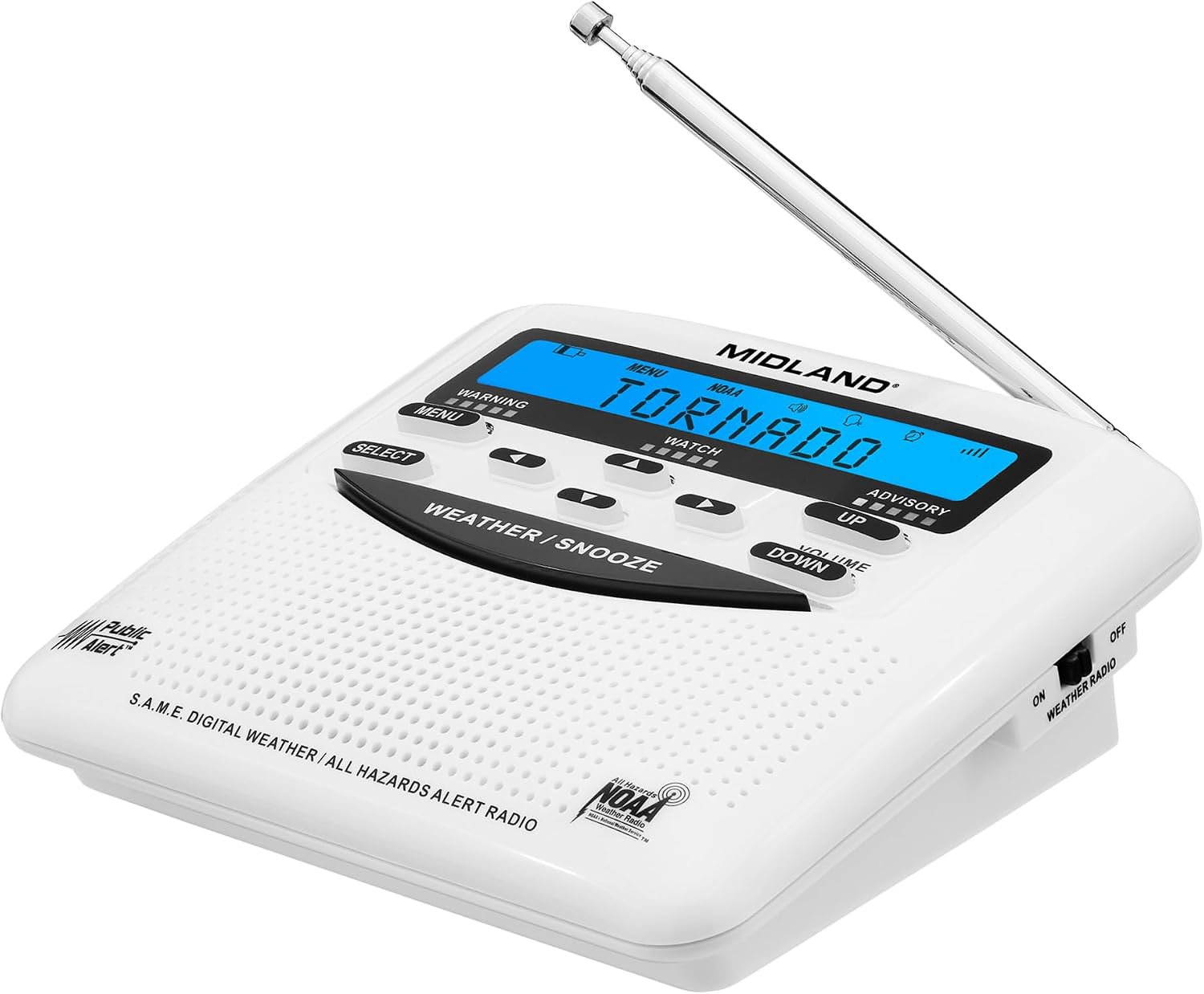
Midland WR120B is built for anyone living in tornado alley, hurricane country, or anywhere else Mother Nature likes to throw tantrums. It delivers loud, localized NOAA alerts via S.A.M.E. programming so you only get warnings that matter to your area, and it's waterproof with battery backup for when the power goes out. The trade-off is that setup requires knowing your local weather station frequency, and a few buyers wished the volume could go even louder (though most say it's plenty loud).
What We Liked 👍
- Extremely loud alarm wakes deepest sleepers
- S.A.M.E. localized alerts for up to 25 counties
- Battery backup plus AC power for flexibility
- Color-coded alert indicators show severity
- Waterproof design handles weather abuse
- Weekly self-test confirms it's working
What Could Be Better 👎
- Requires programming with local weather station
- A few buyers wanted even louder volume
- Only works with NOAA alerts, not commercial weather
- Pillow shaker attachment sold separately
- Corded power means finding wall outlet space
When the siren sounds, you'll actually hear it
I've spent enough nights in the backcountry to know that staying alive means paying attention to what nature's telling you. The
WR120B takes that same philosophy and brings it into your home. This thing is legitimately loud. Buyers keep mentioning they'd sleep through their phone alerts but this radio? Not happening. One reviewer living in a two-story house said they can hear it blaring from anywhere in the building, which is exactly what you want when a tornado warning pops up at 3 AM.
Here's the real magic though: the S.A.M.E. (Specific Area Message Encoding) system lets you program it for up to 25 counties. That means you get alerts that actually matter to you, not generic warnings for the entire state. You're sleeping through fewer false alarms and actually paying attention when something dangerous is headed your way. It monitors over 60 different weather hazards, from tornadoes to flash floods to winter storms. The color-coded alert indicators on the display show you at a glance whether you're dealing with a watch or a warning.
The backup power setup is smart too. It plugs into AC power, but if the grid goes down during a storm (which happens), six AAA batteries take over. You can even unplug it and carry it to your safe room if you need to. That's exactly the kind of flexibility you want when the weather's getting ugly.
The specs that matter when the storm rolls in
At just over 16 ounces and measuring 2 by 5.3 by 6.1 inches, this radio fits on a nightstand without hogging space. It's waterproof, so if your basement floods or you're dealing with heavy spray, it'll keep working. The LCD display stays backlit continuously if you want it to, so you can see alerts even in the dark. The SOS alarm feature adds another layer of emergency functionality.
Setup requires you to know your local NOAA weather radio station frequency (you can find this online in seconds), and then you program your county codes. Yes, there's a learning curve, but every buyer who mentioned the setup said it was straightforward once they got going. The weekly self-test feature is genuinely useful too, it confirms the radio is actually receiving alerts and you're not just storing a fancy paperweight. The 1-year parts and labor warranty covers you if something goes wrong, though the reviews suggest these things are built to last.
Who needs this, and who can skip it
Buy this if you live in a tornado zone, hurricane country, or anywhere that gets serious weather and you've ever slept through your phone alerts. Buy it if you have elderly relatives or deep sleepers in your house. Buy it if you want alerts for your specific area, not just whatever your phone decides to send. The $47 price tag is nothing compared to the peace of mind knowing you'll actually be woken up when something dangerous is approaching. Skip it if you live somewhere weather is basically boring (yes, they exist), or if you're obsessed with cutting every cord and refuse AC power. Skip it if you need alerts for multiple states at once, since S.A.M.E. programming is hyper-local by design. This is specialized gear for a specific job, and it does that job better than anything else at this price point.