Trading my hiking boots for a galactic perspective
I usually prefer gear that can survive a sheer cliff face or a week-long trek in monsoon conditions, but sometimes you just want to sit in a folding chair and stare at the cosmos. When the news cycles are buzzing about planets playing peek-a-boo behind the moon, it is hard not to get curious. I have spent years testing gear that takes a beating, but I have to admit, there is something thrilling about turning your own patch of grass into a mini-observatory. This
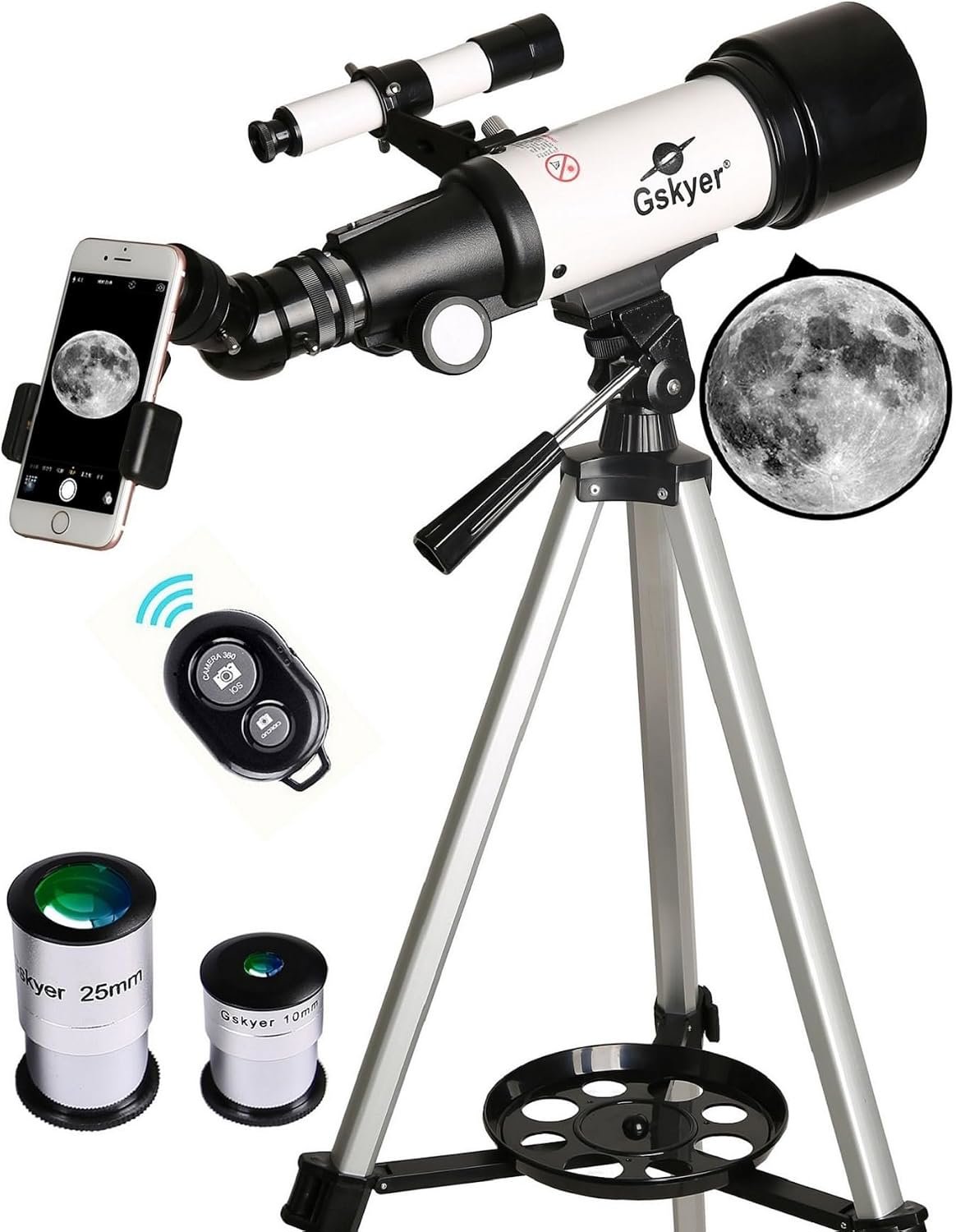
Gskyer model is the kind of gear that doesn't need to survive a mountain storm, but it does need to provide a decent look at the stars without forcing you to take out a second mortgage.
When this arrived at my basecamp, I was struck by how light the package was. It feels like a piece of equipment you could easily toss into the trunk of a car for a weekend camping trip. Setup is remarkably intuitive. If you have ever put together a piece of flat-pack furniture without throwing a wrench across the room, you will have this ready in no time. For a beginner, that is the single biggest win. You want to get to the viewing part, not spend three hours deciphering a manual that looks like it was written in a dead language.
Let us talk about performance, because that is where the rubber meets the road. Using the 70mm aperture, you are not exactly going to be discovering new galaxies, but you are going to get a crisp, satisfying look at the moon. The craters are visible, the shadows are sharp, and it feels genuinely magical to see it that close. Buyers keep mentioning that the clarity surprised them, and I would agree. It is a fantastic tool for introducing kids or curious adults to the wonders of the night sky.
However, we need to address the elephant in the room: this is budget-friendly gear. The tripod is light, which makes it portable, but it is also prone to wobbling. If you bump it, you are going to lose your focus faster than you can say 'Jupiter.' It is not a tank. If you are looking for military-grade stability, you are looking at the wrong price bracket. I have seen some feedback about the plastic housing on the eyepieces being a bit delicate, which is a fair critique. If you treat it like a precious piece of glass rather than a hammer, it will serve you well.
Ultimately, it is about expectations. It is a portal to the stars that fits in a bag, not a professional observatory instrument. It is perfect for those nights when the sky is clear, the air is crisp, and you just want to see if you can spot the craters on the moon. If you treat it with the care that delicate lenses deserve, it turns a boring Tuesday night in the backyard into an epic exploration mission.
Features that bring the galaxy a little closer
The
Gskyer 70mm is packed with just enough tech to keep things interesting. The 400mm focal length is a sweet spot for beginners who want a wider field of view, making it easier to hunt down objects in the sky. It comes with two replaceable eyepieces and a 3x Barlow lens, which basically acts as a multiplier for your magnification. It is a clever way to squeeze more power out of the system without making the whole thing bulky and unmanageable.
I am particularly interested in the smartphone adapter. In an age where everyone wants to capture the moment, being able to snap a photo through the eyepiece is a massive plus. It is not going to win you a National Geographic award for space photography, but it is perfect for sharing 'I saw this!' moments with friends. The inclusion of a wireless remote is a smart touch too, as it lets you trigger the camera without jiggling the telescope and ruining your carefully dialed-in view.
The Altazimuth mount is exactly what a beginner needs. It is simple, moves in easy up-down and side-to-side motions, and does not require a degree in astrophysics to operate. It is designed to be user-friendly, and for the most part, it succeeds. The 5x24 finderscope acts as your primary aiming tool, helping you navigate the starry maze before you peer through the main lens. Just take your time with it, and remember that patience is the greatest accessory for any astronomer.
The final frontier verdict
The
Gskyer 70mm is a stellar choice for families, beginners, and anyone who wants a fuss-free way to explore the moon and bright stars without breaking the bank. It is lightweight, simple to set up, and offers a fun, hands-on experience. However, if you are a serious amateur astronomer looking for professional-grade stability or plan on doing heavy-duty astrophotography, you should look for something more robust with a sturdier, heavier mount. For everyone else looking to spark a little curiosity, this is a solid, reliable choice.