More Than Just a Fancy Paperweight
Listen, I have seen my fair share of heaters come and go. Most of them either look like a science experiment gone wrong or they rattle so much you think the house is falling down. When I first looked at the
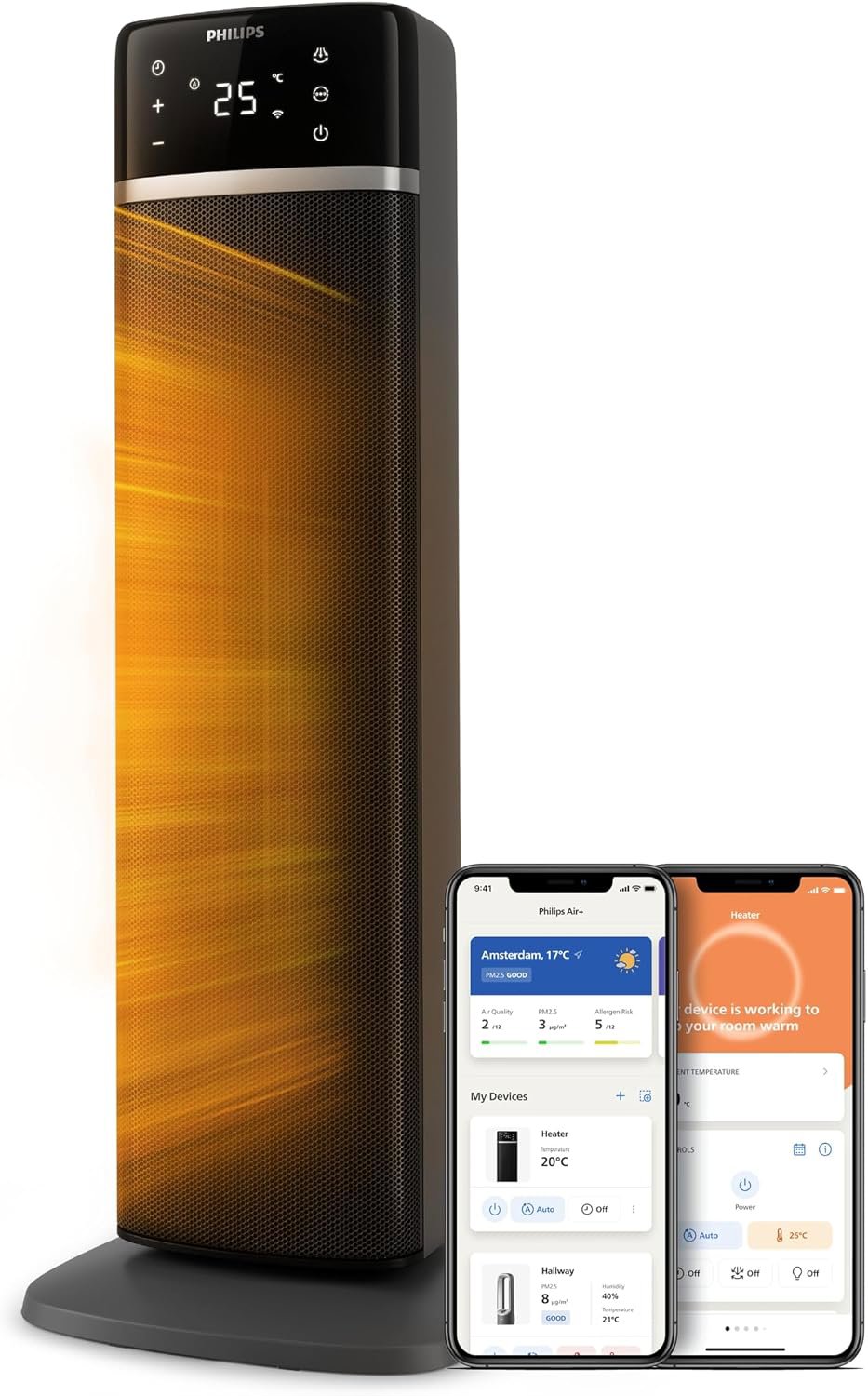
Philips 5000 Series, I was skeptical. We live in an age where everything has to be 'smart' or 'connected' to the internet, and usually, that just means more things that can break. However, this little unit actually earns its keep by doing the one thing it is supposed to do: it throws heat, and it does it fast.
The first thing you notice is how quickly this thing kicks into gear. In about two seconds, you start feeling that warmth, which is a blessing when you are coming in from a damp, freezing morning. It is designed for rooms up to 20 square meters, and for a workshop or a bedroom, it does a fine job of taking the chill off the air without you having to crank up the main house heating system. It is portable enough that you can drag it from the office to the living room without needing a chiropractor afterwards.
Now, let us talk about the 'smart' aspect. Some folks might roll their eyes at having an app for a heater, but there is some utility here. Being able to set a schedule or check the temperature from your bed before you even get up? That is not just a gimmick, that is common sense comfort. Buyers keep mentioning that the app is decent for monitoring, although I will warn you that setting it up requires a bit of patience. If your home network is complicated, you might need a cup of tea and a deep breath to get it all talking to each other.
I have heard some complaints about the build quality, and I have to be blunt: it is mostly plastic. Do not expect the heavy-duty cast iron tanks we used to have in the basement fifty years ago. It feels lighter, and honestly, a bit more fragile. If you are the type who tends to kick things or drop heavy tools near your appliances, you might want to tuck this safely in a corner. It is not going to win any awards for industrial durability, but for the current price, it is hard to grumble too much as long as you treat it with a little care.
Ultimately, it is a tool that works. It does not try to be a spaceship; it just tries to keep you warm. It has got the basic safety features that any sensible person should insist on, like tip-over protection and auto-shutoff. In a world full of flimsy gadgets that end up in a landfill after one season, this one actually puts up a good fight to stay in your home for the long haul.
Features That Actually Make Sense
The ceramic heating element is the heart of this machine, and it is a reliable technology that has been around long enough to prove its worth. It does not smell like burning dust the way those old exposed-wire heaters did, which is a major plus for anyone with a sensitive nose. The oscillation feature is there, and while some folks think it is unnecessary, it does help move the air around a bit better in smaller spaces, ensuring you do not just get a hot spot in one corner while your toes stay frozen.
The AI-powered energy saving is the marketing department's favorite talking point. While I take 'AI' with a grain of salt, the heater does seem to do a decent job of adjusting its output to maintain a steady temperature rather than just blasting at full power until the room is a sauna. This saves on your electricity bill, which is the only kind of math that matters when winter hits. It has an adjustable power range that lets you dial it down when you do not need the full 2000 watts, which is a thoughtful touch.
Safety is where
Philips clearly did their homework. With five layers of protection, including the VDE-certified plug and flame-retardant materials, it hits the marks I care about. I have seen too many cheap heaters that look like fire hazards waiting to happen. This one feels like it was designed by engineers who actually thought about what happens if someone knocks it over. It is quiet enough at 40.5 dB that you can hold a conversation or listen to the radio without it drowning out everything else, which is a rare find in the world of fan-assisted units.
The Final Word from the Workbench
If you are looking for a reliable, no-nonsense way to heat a small room without spending a fortune, the
Philips 5000 Series is a solid pick. It is perfect for the home office dweller, the garage tinkerer, or anyone wanting to add a bit of localized warmth without heating the whole house. However, if you are looking for a tank of a heater that can withstand heavy abuse or if you hate dealing with app connectivity, you might want to look at a simpler, purely manual model. For most folks, though, this is a smart investment that pulls its weight.