The Predator Helios Neo 16 AI is the clear winner on raw power: RTX 5070, 240Hz display, 32GB DDR5 RAM, and AI thermal smarts. The Nitro V 15 delivers solid gaming at half the price with an RTX 5050 and 165Hz panel, but fans scream under load and storage is tight. Pick the Predator if you want future-proof performance and can justify the €1050 premium; grab the Nitro if you play mid-tier games and don't mind fan noise.
GPU performanceRTX 5070 crushes RTX 5050 in frame rates and handles demanding AAA titles at ultra settings; RTX 5050 is still capable but sits one tier down.
NVIDIA GeForce RTX 5070 (winner)
NVIDIA GeForce RTX 5050
CPU and multitaskingUltra 9 275HX is newer, faster, and includes an NPU for AI workloads; i7-13620H is solid but older and lacks the neural processing unit.
Intel Core Ultra 9 275HX (winner)
Intel Core i7-13620H
Display qualityPredator's 240Hz WQXGA is sharper and buttery smooth for competitive gaming; Nitro's 165Hz FHD is still fluid but lower resolution and refresh rate.
16" WQXGA 2560x1600 240Hz (winner)
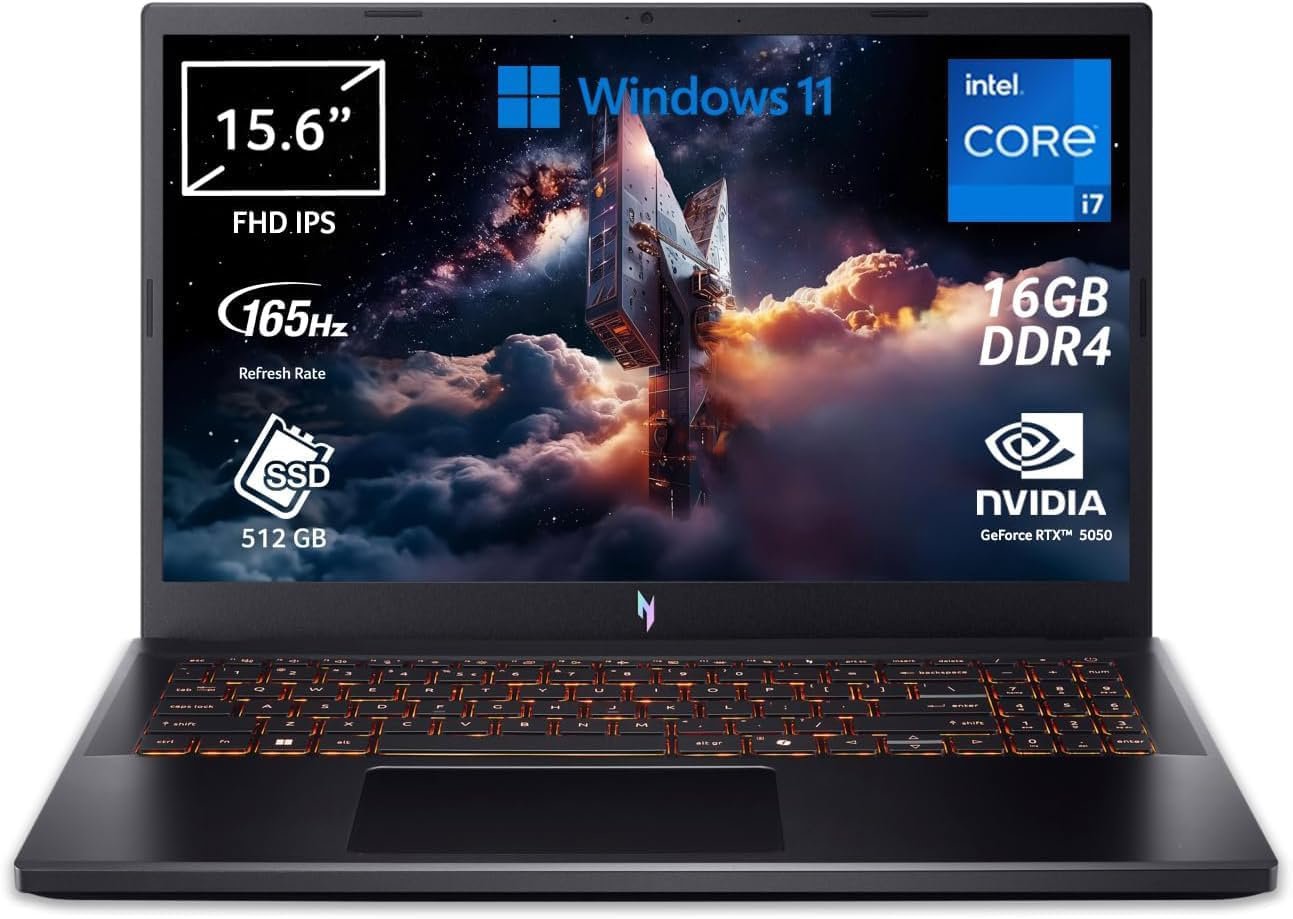
15.6" FHD 1920x1080 165Hz
Memory and storagePredator doubles RAM, uses faster DDR5, and doubles storage; Nitro's 512GB fills up fast and 16GB DDR4 will feel dated in 2-3 years.
32GB DDR5, 1TB NVMe SSD (winner)
16GB DDR4, 512GB SSD
Thermal managementPredator uses AI to optimize thermals in real time; Nitro's fans hit aircraft-carrier decibel levels at full throttle, though thermal performance is solid during normal use.
AI-assisted, advanced cooling (winner)
Dual-fan, can run loud
Price and valueNitro is half the price and justifies it for mid-tier gaming; Predator costs double but specs justify it if you need future-proof power.
€1999 (23% off €2599)
€949 (27% off €1299) (winner)
Portability and form factorNitro is slightly smaller and lighter; both are chunky for travel, but Predator is a true portable desktop replacement.
16", 36x27.5x2.7cm desktop replacement
15.6", 36.2x23.9x2.4cm more compact (winner)
Product by product
Predator Helios Neo 16 AIOur pick
Serious gamers and content creators
This is the high-end gaming machine for people who refuse to compromise. The RTX 5070 and Core Ultra 9 275HX are overkill for most games right now, but they'll keep this laptop relevant for years. AI-assisted cooling and a beautiful 240Hz WQXGA display make it feel like a desktop in a 16-inch shell.
What We Liked 👍
RTX 5070 handles ultra settings effortlessly
32GB DDR5 and 1TB SSD future-proof
240Hz WQXGA display is stunning
AI thermal management keeps it reasonable
What Could Be Better 👎
Costs twice as much as the Nitro
Still runs hot under sustained load
Only 3 verified reviews online
Nitro V 15Best value
Budget gamers who want solid performance
This is the sweet spot for anyone who plays modern games on high settings without breaking the bank. The RTX 5050 and i7-13620H combo is more than capable, and the 165Hz FHD display is sharp. Just know that fans will scream when you max out performance, and 512GB storage fills up faster than you'd expect.
What We Liked 👍
Half the price of Predator
RTX 5050 runs current AAA games smoothly
165Hz FHD display is crisp
Solid build quality for the money
What Could Be Better 👎
Fans go feral at full boost
512GB SSD fills up quickly
16GB DDR4 RAM feels dated
The GPU Hierarchy: Where the Real Damage Gets Done
Spec sheet says one thing, reality says another. The Predator's RTX 5070 is a full tier above the Nitro's RTX 5050, which means you're looking at roughly 30-40% better frame rates in demanding titles. Want to run Cyberpunk 2077 at max ray tracing with DLSS off? Predator laughs. Nitro cries a little. For competitive shooters and esports titles, both will crush it at high settings, so the gap feels less dramatic in practice.
But here's the kicker: the Predator also runs cooler and quieter at the same performance level thanks to its AI thermal optimization. The Nitro's fans start auditioning for a jet engine role the moment you push past 80% GPU load. One buyer specifically noted that maxing out fan speed sounds like an aircraft carrier, which is either a dealbreaker or a badge of honor depending on your tolerance for noise.
The Real Difference: Future-Proofing vs Right Now
The Nitro V 15 is brilliant if you're playing 2023-2024 games and you're fine with upgrading in 3-4 years. 16GB DDR4 RAM and 512GB storage are adequate today, but they'll feel constrictingly tight by 2027. The Predator's 32GB DDR5 and 1TB SSD give you breathing room. It's the difference between 'this works great now' and 'this will still work great in five years.'
The CPU gap matters too: Intel Core Ultra 9 275HX is a current-gen beast with an NPU for AI features. The i7-13620H is still quick, but it's last year's news. If you're doing content creation alongside gaming (streaming, video editing, rendering), the Predator pulls away even further. The Nitro is honest about what it is: a solid 2024 gaming laptop that won't bankrupt you. The Predator is a three-year investment.
The Verdict: Pick Your Poison
Buy the Predator Helios Neo 16 AI if you want a laptop that handles anything you throw at it and will still be snappy in 2028. The RTX 5070, 240Hz display, and AI cooling are worth the €1050 premium if you're serious about gaming and content creation. Just remember it's a desktop replacement, not something you'll want to haul across Europe every week.
Buy the Nitro V 15 if you play modern games at high settings and don't mind fan noise when you're pushing performance. At €949, it's a genuinely smart buy, especially with the 27% discount. Buyer reviews are consistently positive on performance and thermal stability during normal gaming. The tradeoffs are real, smaller display, slower storage, noisier fans, but the price cuts them all down to size. This is the laptop that won't make you feel buyer's remorse.
Our pickPredator Helios Neo 16 AI
Best valueNitro V 15
Prices on amazon.fr as of September 20, 2026. Prices may change.
Disclosure: We share affiliate links and can earn some money when you click on any of those.